Search


Puttable Bonds: Meaning, Benefits, and Risks Explained
 282
282
Bond investors usually look for two things. Regular income and stability. But sometimes, they may also want an exit option before maturity. Puttable bonds are built for that purpose. These bonds allow investors to sell the bond back to the issuer on fixed dates, as per the bond terms.
Key Takeaways
Puttable bonds come with an exit option for investors.
The investor can sell the bond back to the issuer on selected dates.
This feature can help when interest rates rise.
It can also help if the investor needs money before maturity.
Puttable bonds may offer a slightly lower coupon than similar regular bonds.
Investors should always check the issuer, rating, maturity, coupon, put date and other terms before investing.
What are Puttable Bonds?
Puttable bonds are bonds that give investors the right to return the bond to the issuer before maturity.
A normal bond pays interest till maturity. At maturity, the issuer repays the principal. If an investor wants to exit early, they may need to sell the bond in the market. The price may or may not be favourable.
A puttable bond gives another option. It has a put option attached to it. This option allows the investor to sell the bond back to the issuer on certain dates.
So, puttable bonds meaning is simple. These are bonds that give regular interest income, along with a possible early exit route.
But the exit is not available anytime. It is available only as per the dates and conditions mentioned in the bond document.
How Does a Puttable Bond Work?
A puttable bond works like a regular bond in the beginning.
The investor buys the bond. The issuer pays coupon as per schedule. The bond has a final maturity date.
The key difference comes on the put date.
On that date, the investor gets a choice. They can continue holding the bond. Or they can exercise the put option and sell the bond back to the issuer.
This can be useful when interest rates rise.
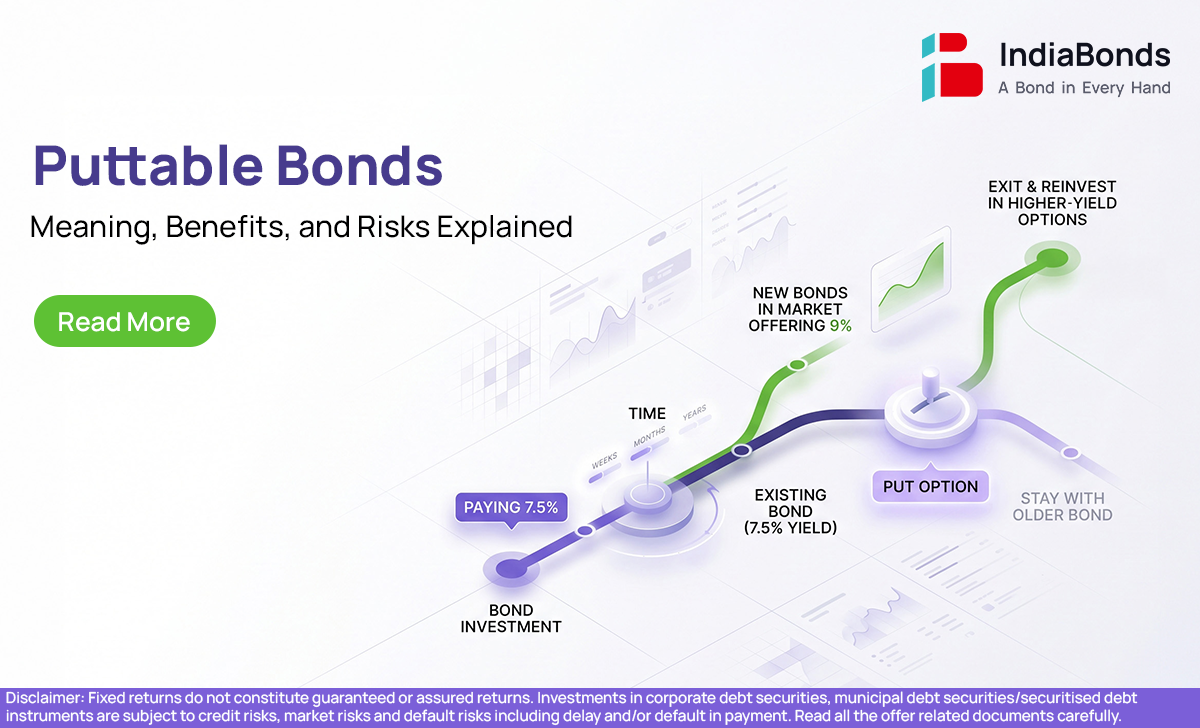
For example, an investor holds a bond paying 7.5%. After some time, new bonds in the market offer 9%. The investor may not want to stay with the older bond. If the bond has a put option, the investor may exit and look at better-yielding options.
This is why puttable bonds are seen as more flexible than plain bonds.




Valuation of Puttable Bonds
The value of puttable bonds depends on two things.
First, the value of the bond itself.
Second, the value of the put option.
The bond value depends on coupon, maturity, interest rates and issuer quality. The put option has value because it gives the investor a right to exit.
This option becomes more useful when interest rates rise. In that case, investors may prefer to exit the old bond and invest in a new bond with a better yield.
Because of this extra benefit, puttable bonds may be valued higher than similar bonds without a put option.
But there is a trade-off. The coupon may be lower because the investor is getting added flexibility.
Types of Puttable Bonds
Puttable bonds may not all work in the same way.
Some bonds may allow the put option only once.
Some may allow it on more than one date.
In some cases, the bond may be put back at face value. In other cases, the price may be different.
That is why investors should read the issue terms carefully.
Puttable Bonds Example
Here is a simple puttable bonds example.
An investor buys a 5-year bond. The coupon is 7.5% per year. The bond has a put option after 3 years.
After 3 years, market rates move up. Similar bonds now offer 9%.
The investor now has a choice. They can continue with the 7.5% bond. Or they can use the put option, return the bond to the issuer, and get the principal back.
The investor may then use that money to invest in another bond with a better yield.
Without the put option, the investor may have had to sell the bond in the market. The market price could have been lower.
How is a Puttable Bond Valued?
A puttable bond is valued by looking at both the bond and the put option.
The bond part is valued like a regular bond. Future coupon payments and principal repayment are considered. Market interest rates and issuer credit quality also matter.
The put option is valued separately. It becomes more valuable when the chance of using it is higher.
If interest rates are expected to rise, the put option becomes more useful. If the issuer’s credit profile weakens, investors may also prefer having an exit option.
For retail investors, the basic idea is enough. A puttable bond gives flexibility. But this flexibility may come with a lower coupon.
Taxation on Callable Bonds in India
Taxation on bonds in India depends on the type of income and the applicable tax rules.
Coupon income from bonds is generally added to the investor’s income. It is taxed as per the investor’s income tax slab.
If the bond is sold, transferred or redeemed before maturity, capital gains tax may apply. The tax treatment can depend on the holding period, listing status and rules applicable at that time.
The put option does not automatically make the bond tax-free or tax-exempt.
Tax rules can change. Investors should check the latest rules or speak to a tax expert before investing.
Advantages and Disadvantages of Investing in a Puttable Bond?
The biggest advantage of a puttable bond is flexibility.
The investor is not fully locked in till maturity. If interest rates rise, the investor may use the put option and reinvest elsewhere.
It can also help if the investor’s cash requirement changes.
Another benefit is that the investor may not need to sell the bond in the secondary market at a lower price.
But there are disadvantages too.
Puttable bonds may offer lower coupons than similar bonds without a put option.
They may also not be easily available in the market.
The put option can be used only on fixed dates. It cannot be used whenever the investor wants.
So, investors should not look only at the put feature. They should also check yield, credit rating, issuer strength, maturity and liquidity.
Risks and Limitations Associated With Puttable Bonds
Puttable bonds are useful, but they are not risk-free.
Credit risk still remains. If the issuer faces financial stress, coupon or principal payments may be affected.
Liquidity risk may also remain. If the investor wants to sell before the put date, the bond may have to be sold in the secondary market.
The coupon may also be lower. If interest rates do not rise, the investor may continue earning a lower coupon.
Also, the put option has conditions. Investors must follow the dates and process given in the bond document.
Benefits of Puttable Bonds
Puttable bonds can be useful for investors who want regular income with some flexibility.
They offer an exit route before maturity.
They may help when interest rates rise.
They may reduce the need to sell in the market at an unfavourable price.
They can also help investors plan better for future cash needs.
In simple terms, puttable bonds add choice to fixed-income investing.
Conclusion
Puttable bonds give investors more control than regular bonds. They offer coupon income and also provide an option to exit on selected dates. This can be helpful in a changing interest rate environment. Still, investors should look at the full picture before investing. The issuer, rating, coupon, maturity, liquidity, tax impact and put terms all matter.
FAQs
What is the difference between puttable bonds and callable bonds?
Puttable bonds give the investor the right to sell the bond back to the issuer before maturity. Callable bonds give the issuer the right to redeem the bond before maturity.
What is meant by a put option bond?
A put option bond is another name for a puttable bond. It means the investor gets an option to return the bond to the issuer on fixed dates and at a pre-decided price.
How does the redemption feature in puttable bonds benefit investors?
It gives investors an exit route before maturity. This can help if interest rates rise or if the investor needs money before the final maturity date.
Can puttable bonds be sold in the secondary market?
Yes, puttable bonds may be sold in the secondary market if they are listed and there is enough demand. The price may change based on interest rates, liquidity and issuer quality.
Are puttable bonds safe?
Puttable bonds offer flexibility, but they are not risk-free. Investors should check the issuer’s credit quality, rating, repayment ability and bond terms before investing.
Disclaimer : Fixed returns do not constitute guaranteed or assured returns. Investments in corporate debt securities, municipal debt securities/securitised debt instruments are subject to credit risks, market risks and default risks including delay and/or default in payment. Read all the offer related documents carefully.
282