

Download IndiaBonds App
400K+ Downloads

 Search


What Are Debentures? Meaning, Types, Features & More
 6.21K
6.21K
What Is a Debenture?
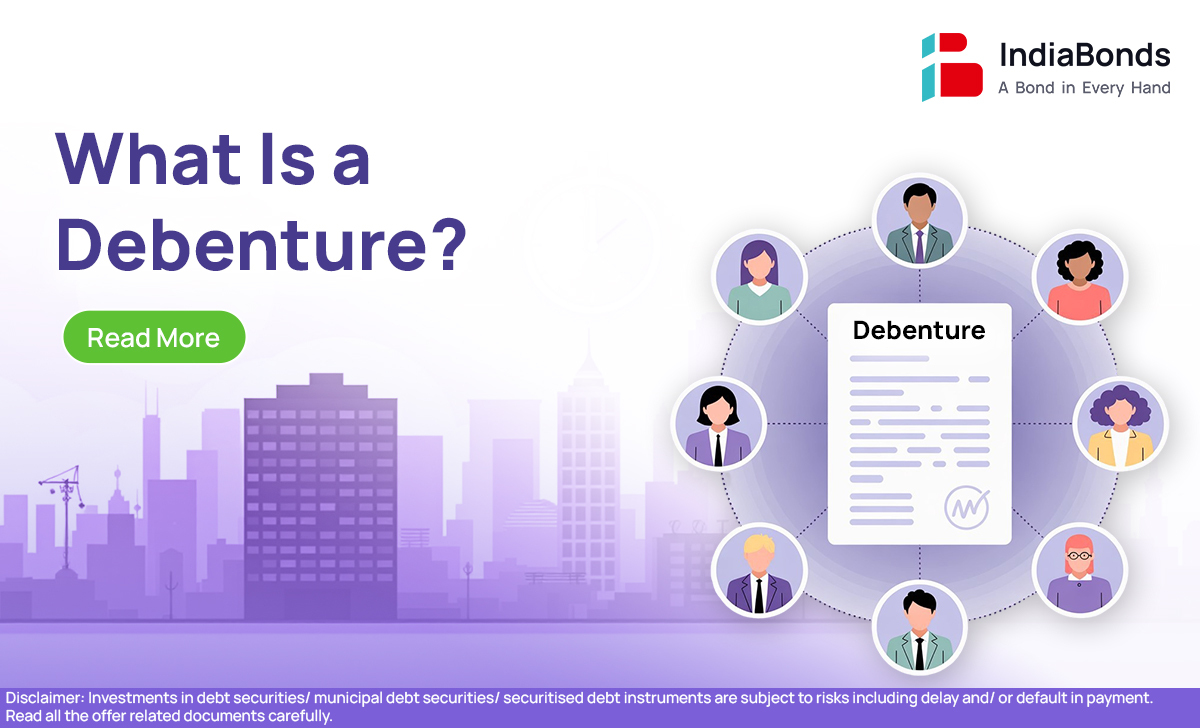
Debenture is a type of bond / debt instrument issued by private companies or governments used to raise money or capital. These are issued to raise money to pay for a forthcoming project’s expenses or business development. These debt securities are a popular type of long-term debt that businesses borrow.
Types of Debentures
In finance it is rarely one-size-fits-all, and debentures are no exception. Companies issue various types of debentures to appeal to different investor needs and risk appetites. Knowing these distinctions is key before you invest.
Let’s break them down.




Based on Security
Secured Debentures:
These are the gold standard for risk-averse investors. Secured debentures are formal loans a company takes, which are explicitly guaranteed by specific assets (like property or equipment) used as collateral. This means if the company defaults on its payments, the debenture holders can lay claim to those specific assets to recover their investment. This collateral makes them a considerably safer option.
Unsecured Debentures: On the other hand, unsecured debentures are backed only by the company’s good name and creditworthiness. There are no specific assets pledged as collateral. To compensate for this higher risk, issuers typically offer a more attractive interest rate. An investment here is a bet on the company’s financial stability.
Based on Convertibility
- Convertible Debentures: These instruments give you the option to convert your debt into shares of the company after a predetermined period. Imagine receiving fixed interest and then, if the company’s stock soars, converting your debentures to capture that growth.
- Non-Convertible Debentures (NCDs): Non-Convertible Debentures are for investors that give fixed income over the potential volatility and growth of the market.
Based on Permanence
- Redeemable Debentures: The vast majority of debentures issued today are redeemable. This means they have a fixed maturity date on which the company repays the principal amount to the holders.
- Perpetual Debentures: These are perpetual debentures; and have no maturity date. The company pays interest on them indefinitely. These are now quite rare, as they essentially lock capital in forever, but they are mostly repaid upon the company’s liquidation.
Features of Debentures
Understanding the core features of debentures is crucial. These characteristics distinguish them from other forms of investment and define the relationship between the investor and the company.
- A Debt Instrument: A debenture is a loan. Debentures help raise money for the long or short term. It can be either secured or unsecured. Debentures are issued by private companies / governments to meet their short-term capital needs.
- Fixed Interest Payments: Most debentures come with a pre-defined interest rate, or coupon. This interest must be paid whether the company is profitable or not, providing a reliable income stream.
- Duration: Debenture investments are made with a specific goal in mind. Depending on the goal the organization pursues, its tenure may be short or long. Debentures often have shorter terms than bonds.
- Priority in Repayment: In the unfortunate event of a company’s liquidation, debenture holders stand ahead of shareholders in the repayment line. Secured debenture holders are paid first from the proceeds of the assets backing their debt.
- Convertibility: Convertible Debentures may have a feature where you can convert the debenture into stocks at a specific time.
Pros and Cons of Debentures
Every investment has two sides to the coin. Have you considered both the benefits and the drawbacks?
- Predictable Income: The fixed coupon rate provides a steady and predictable income stream, which is ideal for investors in or nearing retirement.
- Lower Risk: Compared to equities, debentures carry lower risk.
- Capital Preservation: For those who prioritize protecting their initial investment over chasing high returns, debentures from stable companies are a sound choice.
- The Conversion Option: Convertible debentures offer a unique blend of security and growth potential, allowing participation in equity upside without the initial risk.
Cons of Investing in Debentures
- Limited Returns: Your returns are generally capped at the interest/coupon paid for the bond.
- Inflation Risk: A fixed interest rate can be a double-edged sword. If inflation rises significantly, the real return on your investment could diminish or even turn negative.
- No Ownership Rights: As a lender, you have no influence over the company’s strategic decisions.
Difference between debentures and shares
| Features | Debenture | Share |
| Meaning | It represents creditorship owed by the company | It symbolizes ownership in a company |
| Returns | Fixed interest payments are made regardless of whether the company generates profits. | Dividends are not guaranteed and are distributed only when the company earns profits and at company’s discretion |
| Risk | Relatively lower risk, as returns are fixed | Higher risk, as returns are variable and markets are volatile |
| Voting Rights | Typically, no voting rights | Common shares have voting rights |
| Claim on Assets in case of liquidation | Debenture holders have a higher claim on company assets compared to shareholders | Last in line during liquidation |
| Income | Interest | Dividend |
| Conversion | Convertible debentures can be converted into shares | Cannot be converted |
Ultimately, the choice between them—or the decision to hold both—depends entirely on your personal financial goals and tolerance for risk.
Debenture Risks
All investments carry some degree of risk and with that said, debentures are considered relatively safer than stocks, but they don’t come without risks. It’s important to go in with your eyes open.
- Credit Risk (or Default Risk): Before investing, you should always check the company’s credit rating from agencies like CRISIL or ICRA. A top rating (like AAA) indicates a very low risk of default.
- Interest Rate Risk: If you buy a debenture with a 7% coupon and market rates later rise to 8%, your debenture becomes less attractive.
- Liquidity Risk: Not all debentures are actively traded. Those issued by smaller companies or not listed on an exchange may be difficult to sell quickly.
Conclusion
Debentures are a vital component of the financial landscape, serving as a bridge between corporate capital needs and investor demand for stable returns. They offer a predictable income source and are generally at a lower risk than equities, making them a tool for portfolio diversification. From secured instruments for the investor to convertible options for those seeking a bit more upside, there’s a type of debenture to fit nearly every strategy.
Frequently Asked Questions (FAQs)
Are debentures a safe investment?
Their safety is directly tied to the financial health of the issuer. Debentures from a blue-chip company with a high credit rating are considered very safe. Conversely, unsecured debentures from a financially weak company carry significant risk. Always do your due diligence.
How do convertible debentures benefit investors?
They offer a compelling hybrid structure. You get the security of fixed interest payments like a traditional bond. At the same time, you hold a valuable option: the right to convert your holding into equity shares. This allows you to profit if the company’s stock price performs well, combining income with growth potential.
What happens if a company defaults on its debentures?
If a default occurs, holders of secured debentures are in the strongest position. A debenture trustee can take action to seize and sell the assets pledged as collateral to recover the funds. Unsecured debenture holders become general creditors and must wait to see what is left after secured creditors are paid during liquidation.
Can debentures be traded in the market?
Yes, many debentures are listed on stock exchanges and can be traded just like stocks. This provides liquidity, meaning you can sell your debentures before their maturity date if needed. The trading price will fluctuate based on market interest rates and the company’s perceived creditworthiness.
How is debenture interest taxed?
In India, interest earned from debentures is classified as “Income from Other Sources.” It is added to your total income for the year and taxed at your applicable income tax slab rate. Companies are also required to deduct Tax at Source (TDS) if your interest income exceeds the statutory threshold.
Frequently Asked Questions (FAQs)
Are debentures a safe investment?
The safety of debentures depends heavily on the financial stability of the issuing company. Secured debentures from companies with high credit ratings are considered relatively safe. Unsecured debentures or those from companies with poor credit ratings carry a higher risk of default.
How do convertible debentures benefit investors?
Convertible debentures offer a dual advantage. They provide the stable income of a bond through fixed interest payments. Additionally, they give investors the option to convert their debentures into company shares, allowing them to benefit from potential stock price appreciation. This makes them a hybrid instrument that combines safety and growth potential.
What happens if a company defaults on its debentures?
If a company defaults, the course of action depends on whether the debentures are secured or unsecured. For secured debentures, the holders (through a debenture trustee) can take legal action to sell the specific assets pledged as collateral to recover their money. For unsecured debentures, the holders become general creditors and will be paid from the company’s remaining assets during liquidation, but only after secured creditors are paid.
Can debentures be traded in the market?
Yes, many debentures are listed on stock exchanges and can be traded just like shares. This provides liquidity, allowing investors to buy or sell their debentures before the maturity date. The price of traded debentures can fluctuate based on changes in market interest rates and the issuing company’s creditworthiness.
How is debenture interest taxed?
In India, the interest earned from debentures is added to your total income and taxed according to your applicable income tax slab. This is known as “Income from Other Sources.” Tax is deducted at source (TDS) by the company if the interest income exceeds a certain threshold in a financial year.
Disclaimer : Investments in debt securities/ municipal debt securities/ securitised debt instruments are subject to risks including delay and/ or default in payment. Read all the offer related documents carefully.
6.21K














CIN: U67100MH2008PTC178990
SEBI Registration No.: INZ000311637
NSE Member ID - Debt Segment: 90316
BSE Member ID - Debt Segment: 6811
Caution : Beware of fraudsters and impersonators misusing the name of IndiaBonds. Always verify communications and transactions through our official website www.indiabonds.com and mobile application only. Click here for Advisory and Safety Tips.