

Download IndiaBonds App
400K+ Downloads

 Search


Liquidity Adjustment Facility
 4.44K
4.44K
Introduction
The Liquidity Adjustment Facility is a daily window through which the central bank adds or absorbs short term money from banks. It helps anchor overnight rates, keeps liquidity orderly, and signals policy intent. When conditions are tight, the tool supplies funds. When money is surplus, it soaks up liquidity wisely.
What Is a LAF?
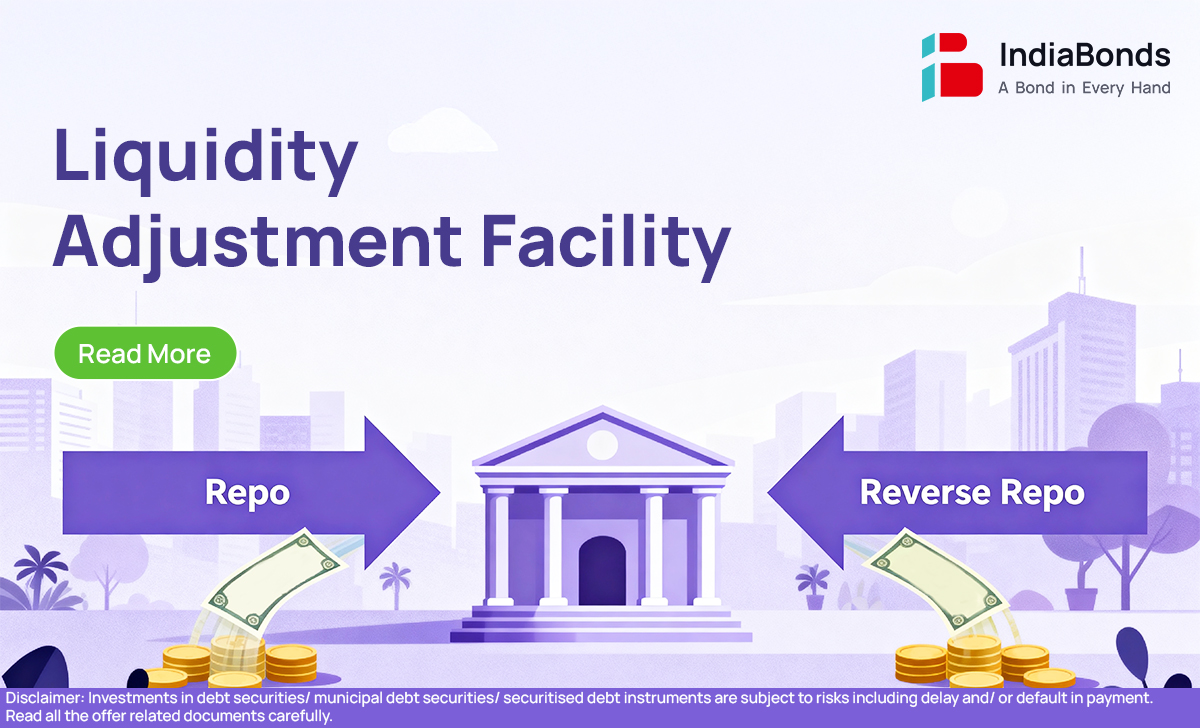
The Liquidity Adjustment Facility or LAF is the framework under which the Reserve Bank conducts repo and reverse repo operations to manage day to day liquidity. In a repo, banks borrow by selling government securities with an agreement to buy them back, paying the repo rate. In a reverse repo, banks park surplus funds and earn the reverse repo rate. By changing access and pricing under LAF, the central bank guides short term rates, keeps the money market stable, and transmits policy changes. For readers asking what is Liquidity Adjustment Facility, it is the framework that guides overnight money daily.




Basics of a Liquidity Adjustment Facility
The Liquidity Adjustment Facility works through standing windows and variable operations that absorb or inject funds at the policy corridor set by the Reserve Bank. At the center sits the repo rate, which is the price at which banks obtain short term liquidity against government securities. Below it lies the Standing Deposit Facility, where banks place surplus cash without collateral. Above the repo stands the Marginal Standing Facility, a safety valve for overnight borrowing against securities. Together these rates create the operating corridor for short term money. Within this corridor, the LAF conducts auctions that can be overnight or longer. When the system shows a deficit, the Reserve Bank supplies liquidity through repo operations. When there is surplus cash, it absorbs liquidity through reverse repo or the Standing Deposit Facility. The intent is clear. Keep the weighted average call rate near the policy stance and keep the payment system smooth. For anyone asking what is Liquidity Adjustment Facility, the answer is that it is a flexible toolkit that keeps day to day rates near the policy mark. The Liquidity Adjustment Facility meaning is best seen in action. It is the daily rhythm of operations that supports confidence.
Liquidity Adjustment Facility and the Economy
The Liquidity Adjustment Facility links monetary policy to real economic activity by steering overnight rates around the desired stance. When growth needs support, easier access to the repo window and durable injections lower short term rates and reduce funding stress. When inflation pressures rise, absorption of excess liquidity and a firmer corridor lift rates and cool demand. Through this daily calibration, the LAF shapes pricing of loans, commercial paper, and bond yields, which then influence spending, investment, and savings. The channel is continuous rather than occasional, so expectations stay anchored and financial conditions adjust smoothly without disruptive swings.
Example
Consider a week when festival related cash withdrawals tighten banking liquidity. The weighted average call rate begins to print above the policy repo rate. In response, the Reserve Bank conducts variable rate repo auctions under the LAF and offers adequate funds against government securities. Banks bid, receive cash, and the call rate returns toward the policy mark. When deposits flow back after the festival, the system turns surplus. The central bank then absorbs liquidity through the Standing Deposit Facility and, if needed, through variable rate reverse repo auctions. Rates ease back into the corridor and market volatility fades. This simple sequence is a clean Liquidity Adjustment Facility Example. The framework supplies funds when money is scarce and soaks up cash when money is abundant, all while keeping short term rates near the policy center. A second illustration involves a policy change. Suppose the repo rate is raised to fight inflation. Through the Liquidity Adjustment Facility, the central bank keeps operations aligned with the new rate, nudging overnight benchmarks upward and allowing the change to pass into lending and deposit rates. In this way, the operational plumbing carries the policy signal into the economy without drama and noise daily.
Conclusion
The Liquidity Adjustment Facility is the day to day bridge between policy intent and actual money market conditions. By steering rates within a clear corridor and by adding or absorbing funds as needed, it anchors expectations and keeps liquidity orderly. For a banker, it offers predictable access to funding or a safe home for surplus cash. For an investor, it explains why short term yields move the way they do around meetings and events. For a student, it is a practical answer to how the central bank runs monetary operations with precision rather than theory alone. It works quietly daily.
FAQ’s
How does the Liquidity Adjustment Facility impact interest rates?
It steers overnight rates by injecting or absorbing funds so the call rate stays near policy.
What role does the Liquidity Adjustment Facility play in controlling inflation?
By tightening liquidity and raising short term funding costs, it cools demand and passes policy through.
How are the repo rate and reverse repo rate determined in the Liquidity Adjustment Facility?
The Committee sets stance and the Reserve Bank sets the corridor. LAF keeps market rates aligned.
Are there any risks associated with using the Liquidity Adjustment Facility?
Misjudged size or timing can jolt rates, and long reliance may hide structural gaps.
What is LAF and sdf?
LAF is the Liquidity Adjustment Facility. SDF is the Standing Deposit Facility to absorb surplus.
What is the difference between LAF and msf?
LAF is the framework. MSF is the window for overnight borrowing at the ceiling.
Disclaimer : Investments in debt securities/ municipal debt securities/ securitised debt instruments are subject to risks including delay and/ or default in payment. Read all the offer related documents carefully.
4.44K













CIN: U67100MH2008PTC178990
SEBI Registration No.: INZ000311637
NSE Member ID - Debt Segment: 90316
BSE Member ID - Debt Segment: 6811
Caution : Beware of fraudsters and impersonators misusing the name of IndiaBonds. Always verify communications and transactions through our official website www.indiabonds.com and mobile application only. Click here for Advisory and Safety Tips.