Search


What is Call Option?
 246
246
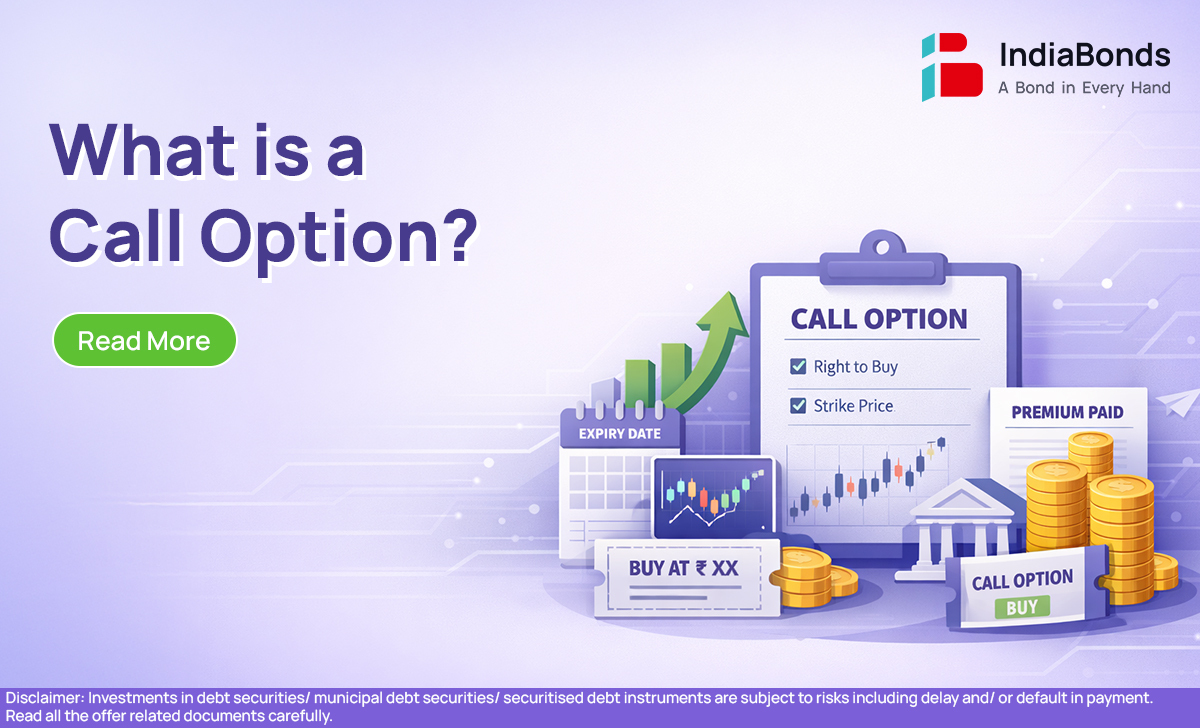
In equity and derivatives conversations, the term Call Option appears very frequently. For many new investors it sounds technical, even intimidating. Yet at its core, a call is simply a contract that gives someone the right to buy an asset at a fixed price in the future. Once this idea is clear, the rest of the concepts around call options start falling into place.
What Is a Call Option?
A good starting point is the basic Definition of Call Option.
A Call Option is a contract that gives the holder the right, but not the obligation, to buy an underlying asset at a pre-agreed price (called the strike price) on or before a specific date. For this right, the buyer pays a fee known as the premium.
Key features can be summarised as:
- Right to buy, not an obligation
- Pre-decided strike price
- Limited life till the expiry date
- Upfront premium paid by the buyer to the seller
Whenever someone asks, “What is Call Option in simple terms?”, it may be explained as paying a small amount today to keep the possibility open of buying an asset later at a fixed price.




How Call Options Work
Mechanically, a call option involves two parties – a buyer and a seller.
- The Buy Call Option side pays the premium and gets the right to buy.
- The Sell Call Option side (also called the writer) receives the premium and takes on the obligation to sell the asset if the buyer chooses to exercise.
If, at expiry, the market price of the underlying is higher than the strike price, the option is “in the money”. The buyer may then exercise the option and buy cheaper than the market, or square off in the market by selling the option itself. If the market price stays below the strike price, the option usually expires worthless. The maximum loss for the buyer is only the premium paid, while the seller keeps that premium as income for taking risk.
Long vs. Short Call Options
Market jargon often uses the terms Long Call Option and Short Call Option.
- A Long Call Option refers to the position of the buyer of the call. The buyer is “long” the option and benefits if the underlying price rises significantly.
- A Short Call Option is the position of the seller or writer of the call. The seller is “short” and profits if the price stays below the strike or does not move up too much.
In summary:
- Long call = limited loss, potentially unlimited gain
- Short call = limited gain (premium), potentially large loss
Understanding this difference is critical before entering any options trade.
How To Calculate Call Option Payoffs
The Call option payoff at expiry depends on how far the market price is from the strike price. For the buyer, the payoff per unit at expiry is:
- If market price > strike price: market price – strike price – premium
- If market price ≤ strike price: – premium (the option expires worthless)
For the seller the payoff is simply the mirror image:
- If market price > strike price: premium – (market price – strike price)
- If market price ≤ strike price: + premium
This simple structure gives call options their attractive “limited downside, open upside” shape for buyers, and the opposite for sellers.
Payoffs for Call Option Buyers
For a buyer, the main attraction is that the maximum possible loss is known on day one – the premium paid. Once that amount is committed, the potential upside depends on how far the underlying asset can rally.
If the price moves sharply above the strike, the value of the call can rise multiple times over the original premium. If the move fails to materialise, the buyer may lose the premium, but no more. Because of this asymmetric payout, many investors prefer to use calls to express a bullish view while controlling downside.
Using Call Options
Call options can be used in several ways. Common uses include:
- Directional view – taking a Long Call Option when an investor expects a strong upward move in the underlying.
- Portfolio hedge – buying calls on market indices as insurance against missing a sudden rally while holding large cash balances.
- Income strategies – institutions sometimes Sell Call Option positions against existing holdings to earn extra premium income.
- Structured strategies – combining calls with other options or the underlying itself to create customised payoff structures.
Used thoughtfully, call options can complement traditional investing rather than replace it.
Call Option Examples
Simple Examples of Call Option usage make the concept more concrete.
- An investor expects a company’s share, currently at ₹500, to rise over the next three months. Instead of buying the share outright, the investor pays ₹20 as premium for a three-month call with a strike of ₹520. If the price climbs to ₹600, the call is worth at least ₹80 (600 – 520). After subtracting the ₹20 premium, the net gain is ₹60, which is a healthy return on capital deployed.
- Another example is an institution holding a large equity portfolio. It may Sell Call Option contracts at a higher strike to earn additional income. If markets remain flat, the options expire worthless and the institution keeps the premium.
These simple illustrations show how calls can either add leverage to a bullish view or bring in extra income on an existing holding.
Difference Between Call Option and Put Option
Beginners often confuse call and put options. A clear distinction helps:
| Feature | Call Option (Right to Buy) | Put Option (Right to Sell) |
| View on underlying | Generally bullish | Generally bearish |
| Right of the buyer | To buy at the strike price | To sell at the strike price |
| Obligation of the seller | To sell if exercised | To buy if exercised |
| Payoff shape for buyer | Limited loss, unlimited upside | Limited loss, significant downside protection |
Together, puts and calls give investors flexible building blocks for risk management.
When Should You Buy a Call Option?
There are a few situations where buying a call makes particular sense:
- When an investor expects a strong rise in the underlying price but wants to limit downside.
- When capital is limited and the investor prefers exposure through a smaller premium rather than full purchase of the asset.
- When there is a potential event – such as an earnings announcement – that might drive a sharp move.
In each case, the Buy Call Option strategy translates a bullish expectation into a defined-risk position.
When Should You Sell Call Option?
Deciding when to Sell Call Option is equally important. A writer might consider selling calls when:
- The investor already owns the underlying asset and is comfortable parting with it if the price rises above a chosen level.
- The view on the market is neutral to slightly bearish, and earning premium income is more important than capturing large upside.
- Volatility is high and option premiums are rich, making writing options more attractive.
However, because the risk for a naked call writer can be substantial, this approach is best handled with experience and proper risk controls.
Covered Call Options
A Covered Call Option strategy is one of the more conservative ways of writing calls. Here, the investor already holds the underlying asset and sells a call option against it.
Typical features:
- The position is “covered” because the shares or units are already in the portfolio.
- If the option is exercised, the investor delivers from existing holdings instead of buying at a higher market price.
- The premium received adds to overall return, especially in sideways markets.
This approach suits investors who are mildly bullish or neutral and are willing to sell their holdings at a pre-decided target price.
Naked Call Options
In a Naked Call Option strategy, the investor sells call options without owning the underlying asset.
Key characteristics include:
- Higher risk – if the price rises sharply, the seller may have to buy at a high market price to deliver at the lower strike.
- Limited income – the premium is capped, while losses can be substantial.
- Requires careful monitoring, margin and risk management.
Because of this risk profile, naked calls are usually considered an advanced strategy and not appropriate for conservative investors.
Weekly Options and Monthly Options
Options today come with different expiry cycles. Weekly options and Monthly options simply refer to how frequently they expire.
- Weekly options have short lifespans and are popular for traders who focus on short-term moves or events.
- Monthly options line up with the traditional expiry cycle and may suit those with slightly longer views.
The basic structure of a Call Option payoff remains the same; only the time frame changes.
Conclusion
A call option may look complicated at first glance, but once the building blocks are separated – right to buy, strike price, premium, time to expiry – the logic becomes far easier to follow. Understanding What is Call Option, how the positions of buyers and sellers differ, and how payoffs behave at expiry gives investors another useful tool for expressing views and managing risk. Like any market instrument, calls need respect and discipline, but in capable hands they add flexibility and precision to a portfolio.
FAQ’s
When should you buy a call option?
A call is usually bought when an investor has a bullish view on the underlying asset and wants to limit downside to the premium paid. It can also be useful around events that may trigger a sharp move.
When to sell the call option?
Selling or writing a call is generally considered when an investor expects the market to remain flat or mildly negative and wants to generate income from the premium. It is often combined with existing holdings in a covered call strategy.
How do call options work?
Call options work by transferring the right to buy an asset at a fixed price from the seller to the buyer in exchange for a premium. At expiry, if the market price is above the strike, the option has value; if not, it usually expires worthless.
What is a call option with an example?
If a stock trades at ₹200 and an investor buys a three-month call with a strike of ₹210 for a premium of ₹5, the investor has the right to buy at ₹210. If the stock rises to ₹250, exercising the option allows a cheaper purchase, and the gain is roughly ₹35 (250 – 210 – 5).
Is Buying a Call Bullish or Bearish?
Buying a call is a bullish strategy. The buyer benefits if the underlying asset price rises significantly before expiry.
What is the call option?
The call option is a derivative contract that gives its holder the right, without obligation, to buy an underlying asset at a pre-agreed strike price within a specified period.
What are put and call options?
Call options give the right to buy, while put options give the right to sell the underlying asset at a fixed strike price. Both are building blocks used to design different payoff patterns.
Why would someone buy a call option?
Someone may buy a call to participate in potential upside with limited risk, to gain leveraged exposure with smaller capital, or to hedge against missing a rally.
How do call options make money?
Call options make money when the underlying asset price rises above the strike price by more than the premium paid. In that situation the option can be exercised or sold in the market for a profit, delivering the classic call option payoff.
Disclaimer : Investments in debt securities/ municipal debt securities/ securitised debt instruments are subject to risks including delay and/ or default in payment. Read all the offer related documents carefully. The inventories offered on the platform offer interest upto 12% returns.
246