Search


What is Callable Bond?
 1.38K
1.38K
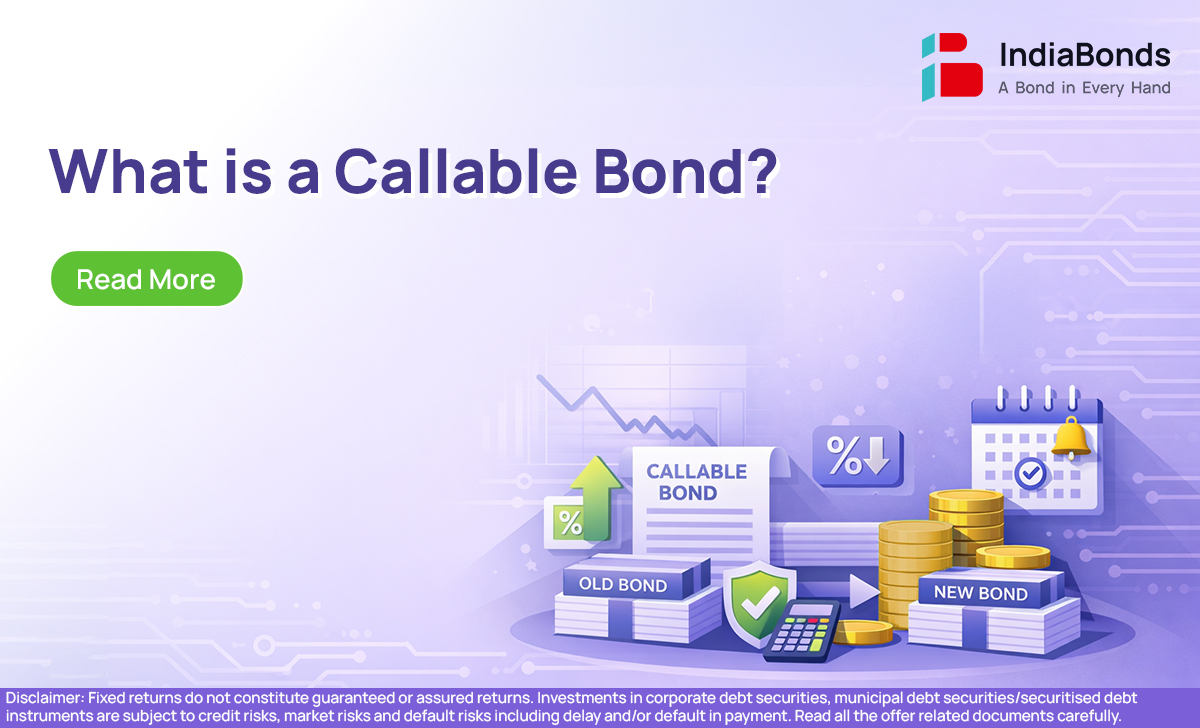
When most investors buy a bond, they assume one thing: regular interest payments until maturity, and then their money back. It feels predictable.
But some bonds come with a twist.
A Callable Bond gives the issuer the right to repay the bond before maturity. That small clause can change how the bond behaves — especially when interest rates move.
What is a Callable Bond?
Let’s answer the basic question first: what is a callable bond?
A callable bond is simply a bond that the issuer can redeem early. That’s the plain-language callable bond definition.
The meaning of callable bond becomes clearer when you think about why an issuer would want that option. If interest rates fall after the bond is issued, the company may prefer to repay the old higher-interest bond and issue a new one at a lower rate.
From the investor’s side, this means the bond might not last as long as expected.
That early redemption feature is what separates callable bonds from standard bonds.




How do Callable Bonds Work?
Understanding how do callable bonds work is mostly about interest rates.
When rates fall, callable bonds are more likely to be redeemed. When rates rise, issuers usually leave them outstanding.
Most callable bonds include:
- A call date (or schedule of dates)
- A call price (sometimes slightly above face value)
- A call protection period (during which the bond cannot be called)
Once the protection period ends, the issuer can choose whether calling the bond makes financial sense. For investors, the uncertainty lies in timing. You may plan for ten years of interest payments — but the bond might be called in five.
How is a Callable Bond Valued?
Callable bonds are valued differently from regular bonds because there’s uncertainty built in.
When investors price a callable bond, they usually look at both:
- Yield to maturity (YTM)
- Yield to call (YTC)
Yield to call assumes the bond is redeemed at the earliest possible call date. In falling rate environments, this becomes especially relevant.
Because of the call risk, callable bonds often offer higher coupon rates than similar non-callable bonds. That extra yield compensates investors for the possibility of early repayment.
There’s also a practical effect: when interest rates fall sharply, callable bond prices don’t rise as much as non-callable bonds. Investors know the issuer may step in and redeem them. So price appreciation has a ceiling.
Example of Callable Bond
A simple callable bond example makes this easier to see.
Imagine a company issues a 10-year bond at a 9% interest rate, with the option to call it after five years.
Now suppose five years later, market interest rates drop to 6%.
The company can:
- Call the old bond
- Repay investors
- Issue a new bond at 6%
For the company, that lowers borrowing costs.
For investors:
- They earned 9% for five years
- They get their principal back
- But now they must reinvest at 6%
That reinvestment risk is one of the core concerns with callable bonds.
Different Types of Callable Bonds
Callable bonds are not all structured the same way.
Common types include:
- European Call: Can only be called on one specific date
- American Call: Can be called anytime after a certain period
- Bermudan Call: Can be called on specific pre-defined dates
The more flexibility the issuer has, the more uncertainty the investor carries.
This flexibility affects pricing.
What are the Pros of a Callable Bond?
Callable bonds are not automatically negative for investors.
Some potential advantages include:
- Higher coupon rates compared to similar non-callable bonds
- Possible call premium if redeemed early
- Attractive yields in stable rate environments
For income-focused investors, the higher coupon can be appealing — especially if rates are not expected to decline significantly.
What are the Cons of a Callable Bond?
There are also clear drawbacks.
- Reinvestment risk if the bond is called
- Limited price upside when rates fall
- Uncertain holding period
- Yield-to-maturity may not reflect actual return
Because of this, investors often focus on yield-to-call when evaluating callable bonds.
Ignoring the call feature can lead to unrealistic return expectations.
Conclusion
A Callable Bond adds flexibility — but mainly for the issuer.
For investors, it introduces uncertainty around timing and reinvestment. While higher coupons may look attractive, the call feature changes how the bond behaves when interest rates move.
Understanding callable bonds is not about memorizing definitions. It’s about recognizing how interest rate shifts affect both issuers and investors.
FAQ
Should I avoid callable bonds?
Not necessarily. Callable bonds can offer higher yields. However, investors should understand reinvestment risk and assess whether yield-to-call aligns with their goals.
What are the disadvantages of callable bonds?
The main disadvantages include reinvestment risk, limited price appreciation in falling rate environments, and uncertainty regarding how long the bond will remain outstanding.
What’s the difference between callable and non-callable bonds?
A callable bond allows the issuer to redeem the bond before maturity. A non-callable bond does not include this feature, providing greater certainty to investors.
What are callable and putable bonds?
Callable bonds give the issuer early redemption rights. Putable bonds give the investor the right to sell the bond back before maturity.
Disclaimer : Fixed returns do not constitute guaranteed or assured returns. Investments in corporate debt securities, municipal debt securities/securitised debt instruments are subject to credit risks, market risks and default risks including delay and/or default in payment. Read all the offer related documents carefully.
1.38K