Search


Face Value: Meaning, Calculation & Role in Bonds and Shares Explained
 6.56K
6.56K
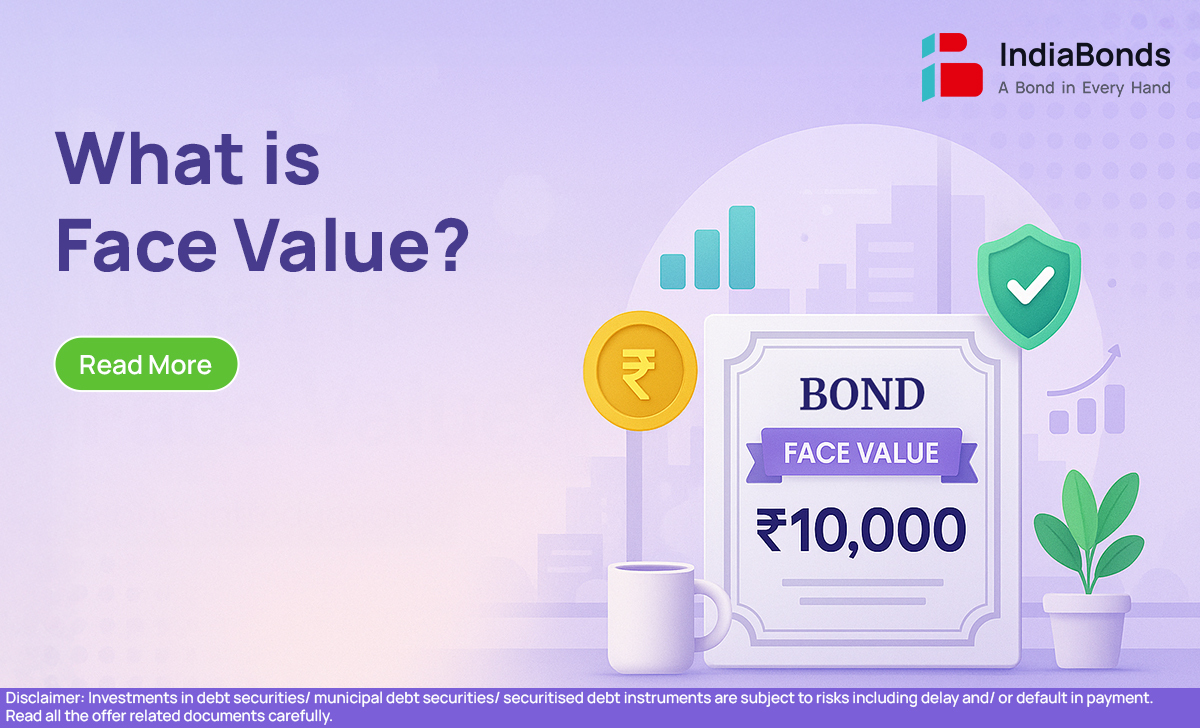
Every investor has bumped into the term Face Value—sometimes on a bond statement, other times in an IPO booklet. At first glance, it feels like a small detail. But this simple number quietly shapes how much you earn, how companies calculate dividends, and how bonds are repaid.
What is Face Value? Meaning & Definition
So, what is Face Value? In plain words, it is the amount printed on the bond or share when it is first issued. A government bond might say ₹1,000. A share might carry ₹10. That’s its Face Value. It’s not about what the market will pay today—it’s about the base figure. The Face Value definition is clear: it’s the formal worth, set by the issuer, which guides interest, dividends, and redemption amounts. It doesn’t swing up and down with the market like prices do.
Understanding Face Value
The Face Value meaning can be compared to the MRP on a product. You may buy a soap at discount or higher in a local shop, but the printed number remains the reference. In finance, it’s similar. Buy a bond at ₹950 or ₹1,050, you’ll still get back ₹1,000 at maturity if that’s the Face Value. For shares, it’s the company’s way of assigning a base number for accounting. While market players chase prices, regulators and auditors look at Face Value to keep order in the system.




Face Value of a Bond – How It Works
Bonds run on Face Value. If you lend ₹1,000 through an SBI bond, that’s the Face Value. A 7% coupon means ₹70 each year—always on that ₹1,000. Whether the bond trades at ₹950 or ₹1,050 doesn’t matter for your interest payout.
Face Value of a Share – How It Works
With shares, Face Value plays a more background role, but it’s still important. A company might issue a share with a Face Value of ₹10. That same share could be trading at ₹700 or ₹1,500 in the market. Market prices grab the headlines, but Face Value drives decisions inside the company.
Dividends are the easiest example. If a company declares a 50% dividend on shares with a Face Value of ₹10, investors receive ₹5 per share—regardless of whether the stock trades at ₹200 or ₹2,000. Corporate actions like stock splits also revolve around Face Value. Remember Infosys? Its ₹10 Face Value shares were split into ₹5, doubling the number of shares investors held. Reliance has done this too.
For investors, Face Value isn’t about profit or loss. It’s the base companies use to declare payouts, split shares, or maintain their books. It may look like a small number, but it keeps the entire system consistent.
Face Value vs Market Value – Key Differences
Now here’s the common confusion: Face Value is not market value. Face Value is fixed when the security is created. Market value is what people are ready to pay today. Suppose a PFC bond with a Face Value of ₹1,000 is trading at ₹960. That’s the market reacting to interest rates. Similarly, shares with a Face Value of ₹10 may sell at ₹1,200 in the market. Market values shift daily. Face Value mostly doesn’t budge. That’s why one is the anchor, and the other the floating price tag.
How to Calculate Face Value
Face value is the nominal value assigned to a share or bond by the issuer at the time of issue. For most listed companies in India, the face value is predetermined and mentioned in the company’s share capital details.
Unlike market price, investors do not calculate face value based on demand and supply. It is fixed by the issuing company unless changed through a corporate action such as a stock split or share consolidation.
For example:
- A company issues shares with a face value of ₹10 each.
- If you own 100 shares, the total face value of your holdings is:
Total Face Value = Number of Shares × Face Value per Share
Example:
100 × ₹10 = ₹1,000
Although the market price of the shares may fluctuate every day, the face value remains unchanged unless the company officially revises it.
Importance of Face Value for Investors
While investors often focus on the market price of a share, face value also plays an important role in understanding certain aspects of an investment.
Some of its key uses include:
- Dividend Calculation: Many companies declare dividends as a percentage of the face value of a share.
- Corporate Actions: Face value is used when companies undertake stock splits or share consolidations.
- Accounting and Share Capital: It helps determine a company’s authorised, issued, and paid-up share capital.
- Bond Investments: In bonds, face value generally represents the principal amount that is repaid to investors on maturity.
- Financial Analysis: Investors often refer to face value while evaluating company announcements and corporate actions.
Although face value does not indicate the current worth of a security, it remains an important reference point in both equity and debt investments.
Face Value and Stock Splits in India
A stock split is a corporate action in which a company divides its existing shares into a larger number of shares by reducing the face value of each share. While the number of shares held by investors increases, the overall value of their investment remains broadly unchanged immediately after the split.
For example, if a company announces a 1:5 stock split, the face value may change from ₹10 per share to ₹2 per share. An investor holding 100 shares before the split would own 500 shares after the split.
| Before Stock Split | After Stock Split |
|---|---|
| Face Value: ₹10 | Face Value: ₹2 |
| Shares Held: 100 | Shares Held: 500 |
| Total Face Value: ₹1,000 | Total Face Value: ₹1,000 |
Companies may opt for stock splits to improve affordability and increase liquidity by making shares accessible to a wider base of investors. However, a stock split does not change the company’s overall market capitalisation or the intrinsic value of an investor’s holdings.
Conclusion
In investing, Face Value often hides in plain sight. But it is not just a number on paper. For bonds, it decides your interest and the amount you’ll get back. For shares, it sets the base for dividends and corporate actions. Understanding the Face Value meaning helps separate what’s permanent from what’s temporary in markets. Prices may change by the minute, but Face Value provides a sense of certainty—an anchor for investors in an ocean of moving numbers.
FAQs
Q1. What is the difference between Face Value and a bond’s price?
Face Value is the original amount, say ₹1,000. The bond’s price in the market, though, may be ₹950 or ₹1,050 depending on interest rates. But at maturity, repayment is always at Face Value.
Q2. What is the difference between Face Value and market value?
Face Value is fixed by the issuer at the time of issue. Market value is set by demand and supply. A stock may have a Face Value of ₹10 but trade at ₹1,800 in the market.
Q3. Is Face Value the same as par value?
Yes, in most cases they mean the same thing. Par value is just another way to describe Face Value, especially for bonds.
Q4. When does the Face Value change?
Face Value doesn’t usually change. But in a stock split, companies adjust it. For instance, if a ₹10 Face Value share is split into two, each new share carries a Face Value of ₹5. The number of shares increases, but the total value remains the same.
Q5. Is face value the same as par value?
Yes. The terms face value and par value are generally used interchangeably. Both refer to the nominal value assigned to a share or bond by the issuer at the time of issuance. In the case of bonds, the face value is usually the amount repaid to investors on maturity, while for shares, it serves as the base value for accounting purposes and certain corporate actions.
Q6. Can face value of a share change?
Yes. A company’s face value can change if it undertakes a corporate action such as a stock split or share consolidation (reverse stock split). For example, a company may reduce the face value from ₹10 to ₹2 through a stock split, resulting in an increase in the number of shares held by investors. Similarly, a reverse stock split increases the face value while reducing the number of outstanding shares. Such changes do not, by themselves, alter the total value of an investor’s holdings.
Disclaimer : Investments in debt securities/ municipal debt securities/ securitised debt instruments are subject to risks including delay and/ or default in payment. Read all the offer related documents carefully.
6.56K