Search


Understanding Forward Price
 345
345
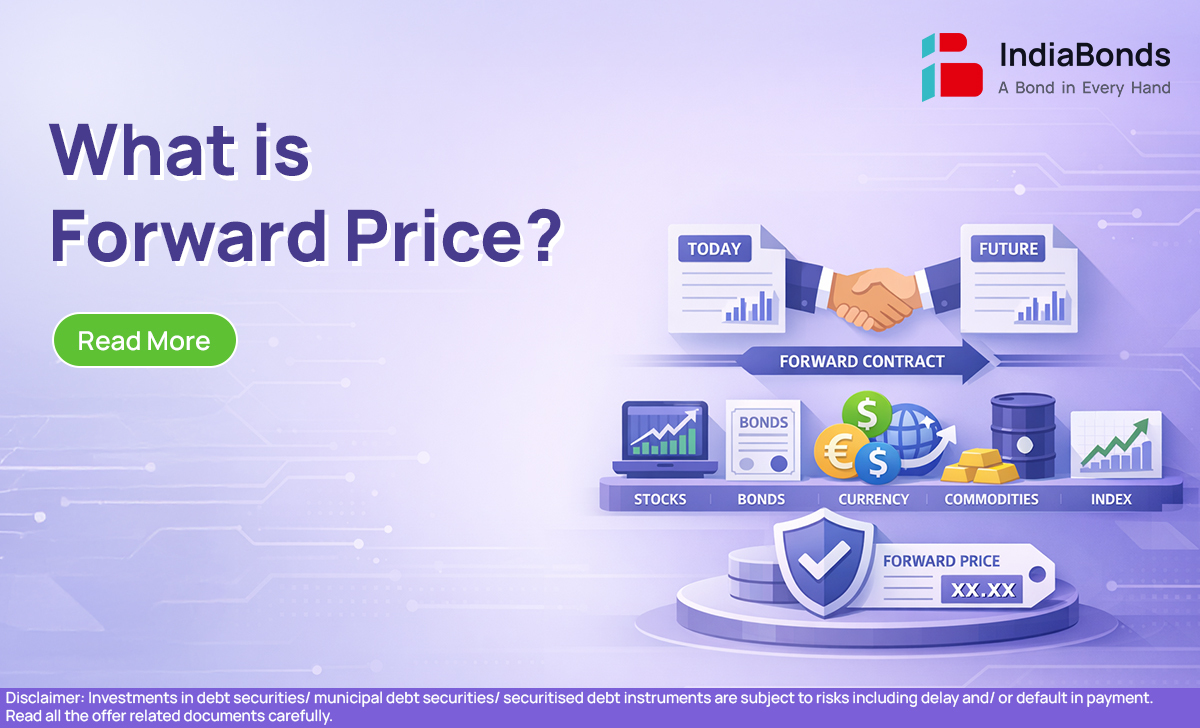
Markets love certainty, but prices rarely stand still. Equity indices move every minute, commodity prices react to global headlines and currency rates swing with every policy comment. In this restless backdrop, many institutions and businesses want clarity about what a future price will be. That is where the idea of Forward Price enters the story. Forward Price sits at the centre of forward contracts – agreements to buy or sell an asset at a later date. By fixing a price today for a trade that will happen in the future, an investor or a business can plan cash flows, protect margins and reduce nasty surprises. This article looks at Understanding Forward Price in a practical way – what it means, how it is calculated and why it matters in everyday finance.
What is Forward Price?
Before diving into the Forward Price Formula, it helps to clarify the basic idea. A forward contract is a private agreement between two parties to transact an asset on a future date. The Forward Price is the pre-agreed price at which that transaction will take place. So, What is Forward Price in simple words? It is the price decided today for delivery of an asset tomorrow. The asset could be a stock, a bond, a currency, a commodity or even an index. The contract may last for a few days or several months, but throughout that life the value of the contract keeps shifting as the market price of the asset changes. The agreed Forward Price, however, remains fixed.




Understanding Forward Price: Key Concepts
When analysts talk about Understanding Forward Price, they usually start with a few building blocks:
- Spot Price – the current market price of the asset.
- Time to Maturity – how long it is until the contract expires.
- Risk-free Interest Rate – often a short-term government security yield, used as a benchmark.
- Costs and Benefits of Holding the Asset – storage, insurance, dividends, coupons or other cash flows.
The base idea is that the Forward Price should reflect what it costs to buy the asset today and carry it into the future, adjusted for any income it generates. If the Forward Price is set far away from this fair value, traders can use arbitrage strategies – buying in one market and selling in another – to lock in risk-free profits. These arbitrage forces usually pull the market back towards the theoretical Forward Price.
In a simple, non-dividend paying case, the no-arbitrage Forward Price Formula is often written as:
Forward Price = Spot Price × (1 + risk-free rate) ^ time This expression captures the idea that an investor could buy the asset today using borrowed money, hold it until the contract date and then deliver it. The loan would grow at the risk-free rate, so the contract price must at least cover that cost.
Example of Calculating Forward Price
A numerical example makes this easier to see. Consider one of the classic Examples of Forward Price used in textbooks, adapted with simple numbers.
Suppose:
- The current spot price of a stock is ₹100.
- The risk-free rate is 8% per year.
- The forward contract matures in 6 months (0.5 years).
- The stock does not pay any dividend in this period.
The steps to work out the Forward Price would be:
- Step 1: Note the inputs
- Spot Price = ₹100
- Annual risk-free rate = 8%
- Time = 0.5 years
- Step 2: Apply the Forward Price Formula
- Forward Price = 100 × (1 + 0.08) ^ 0.5
- Step 3: Calculate the result
- (1 + 0.08) ^ 0.5 is approximately 1.0392
- So Forward Price ≈ 100 × 1.0392 = ₹103.92
In this case, a fair Forward Price for delivery after six months would be about ₹104. If the actual market Forward Price is much higher, a trader could sell the forward, buy the stock spot and lock in a gain. If it is much lower, the opposite trade may be attractive. This is just one of many Examples of Forward Price, but the logic stays similar: start from the spot price and move forward in time using interest and cash-flow assumptions.
Underlying Assets with Dividends
Real markets are rarely as clean as the earlier example. Many underlying assets pay dividends, coupons or other income during the life of the contract. These cash flows reduce the cost of holding the asset and therefore pull the Forward Price lower.
When the underlying is a dividend-paying stock, a common adjustment is:
Forward Price = Spot Price – Present Value of expected dividends + carrying cost
If the stock is expected to pay a ₹4 dividend during the six-month period and the present value of that dividend is ₹3.90, the fair Forward Price in the earlier example would not be ₹103.92. Instead, it would be roughly ₹100 – 3.90 grown at the interest rate over six months.
For assets that pay a continuous income, analysts sometimes use a dividend yield symbolised as “q” and write a compact Forward Price Formula:
Forward Price = Spot Price × e ^ ((r – q) × T) Here “r” is the risk-free rate and “T” is time. While the mathematics look heavier, the underlying intuition stays familiar – income from the asset offsets some part of the financing cost and therefore lowers the Forward Price.
Theories that Support the Forward Price Formula
The fair value of Forward Price does not float in isolation. It is grounded in two important ideas in finance theory.
The first is the cost-of-carry model. This model says that the price of a forward contract must mirror the cost of buying the underlying asset now and carrying it until the contract matures. Carrying includes financing, storage, insurance and any other charges, minus the income earned from the asset, such as dividends or coupons. If the market Forward Price diverges from this cost-of-carry value, arbitrageurs step in.
The second idea is the no-arbitrage principle. Markets dislike free money. If there is a way to make a profit without risk, traders quickly enter the trade until the opportunity disappears. The Forward Price Formula is built so that, in theory, no such risk-free profit is possible when the contract is fairly priced. Together, these theories keep the relationship between spot price, Forward Price, interest rates and income broadly consistent over time. Of course, real markets include frictions such as funding constraints, credit risk and transaction costs, but the basic logic still guides pricing.
Conclusion
Forward contracts may sound complex, but the idea behind Forward Price is quite intuitive. It is simply the fair price agreed today for buying or selling an asset at a future date, once interest, time and income from the asset are taken into account.
By Understanding Forward Price, investors, businesses and risk managers can see how current markets are linking today’s prices with tomorrow’s expectations. They can judge whether a quoted price looks reasonable, spot mis-pricing when it appears and use forwards intelligently for hedging or investment. Once the building blocks are clear – spot, time, rate and income – the numbers themselves are not as intimidating as they first appear.
FAQ’s
What Is the Difference Between Forward Price and Spot Price?
The spot price is the current market price of an asset for immediate delivery, while the Forward Price is the agreed price for delivery at a future date. Spot reflects today’s supply-demand balance. Forward Price, on the other hand, factors in interest rates, time and any expected income or costs of holding the asset until the contract matures.
Why Do Some Investors Want to Lock in a Price?
Many investors or businesses face future cash flows that depend on uncertain prices – an exporter waiting to receive dollars, or a manufacturer planning to buy raw materials, for example. By locking in a Forward Price, they gain clarity about future costs or revenues and protect margins from adverse price moves. This makes budgeting and risk management more predictable.
What Are the Drawbacks of Locking in a Forward Price?
While a forward contract offers protection, it also removes the chance to benefit from favourable price movements. If the market later moves in a direction that would have been profitable, the party who locked in a Forward Price cannot enjoy that upside. There is also counterparty risk – the possibility that the other side of the contract defaults – and, in some cases, funding or margin requirements during the life of the contract.
What Are the Main factors That Determine an Asset’s Forward Price?
Several elements come together to shape an asset’s Forward Price: the current spot price, the time remaining to maturity, the risk-free interest rate, and any expected income or costs from holding the asset, such as dividends, coupons, storage or insurance. Market expectations and liquidity conditions also influence the final traded level, but the theoretical fair value is guided by the Forward Price Formula built on these core factors.
Disclaimer : Investments in debt securities/ municipal debt securities/ securitised debt instruments are subject to risks including delay and/ or default in payment. Read all the offer related documents carefully. The inventories offered on the platform offer interest upto 12% returns.
345