Search


What is Market Maker?
 258
258
When someone buys or sells a stock, the trade feels instant. A click happens. The order is filled. The price updates.
But trades don’t fill by magic. Behind that smooth execution, there is usually someone willing to take the other side of the deal. That “someone” is often a market maker. Most investors don’t see them. But markets would feel very different without them.
What is market maker?
Let’s start simply.
If you want to sell a stock right now, someone has to be ready to buy it. If no one is interested at that moment, what happens?
That’s where the market maker comes in.
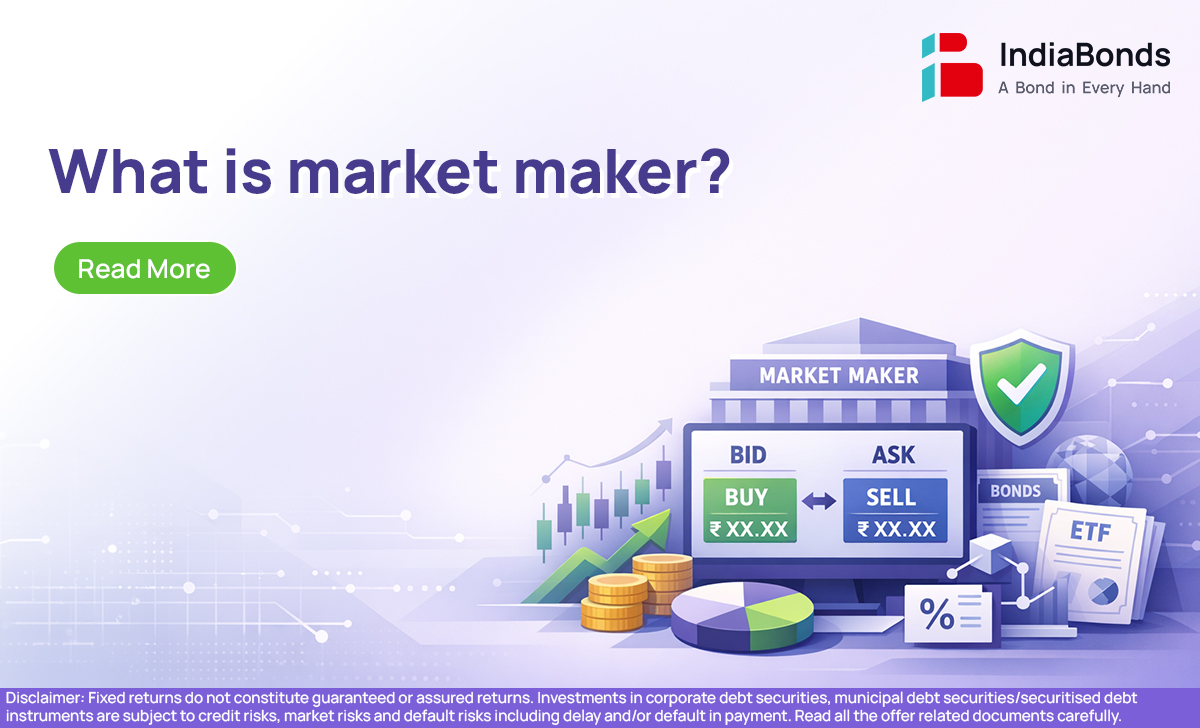
The market maker meaning is straightforward: it is a financial firm that continuously offers to buy and sell a security. The formal Market maker definition says they quote both a bid price (what they will pay) and an ask price (what they will sell at).
So if you ever wondered what is market maker, the short answer is this:
It’s a liquidity provider. It keeps trading moving.
They are active in stocks, bonds, ETFs, derivatives — almost every major market.




Example of a market maker
An example of market maker activity is easiest to understand with numbers.
Imagine a stock trading around ₹1,000.
A market maker might quote:
- Buy at ₹999.50
- Sell at ₹1,000.50
If you want to sell immediately, they buy from you at ₹999.50.
If someone wants to buy immediately, they sell at ₹1,000.50.
That ₹1 difference is the spread.
This spread is how the market maker earns money. It may look small, but across thousands of trades, it adds up.
More importantly, it allows trading to happen smoothly.
The Role and Importance of Market Makers
The Role of Market Makers is not glamorous, but it is essential.
They provide liquidity. That simply means they make sure you can buy or sell without waiting too long.
The Importance of Market Makers becomes obvious in less active securities. In small companies or certain bonds, buyers and sellers don’t always line up perfectly. Without a liquidity provider, spreads would widen sharply. Prices would jump more aggressively.
Market makers help reduce those gaps.
They don’t stop volatility. But they reduce trading friction.
In many ways, they act as shock absorbers for markets.
How Market Makers Operate
Understanding Market Makers today means understanding technology.
Most modern market makers use algorithms. Their systems constantly update bid and ask prices based on supply, demand, and risk exposure.
If they end up holding too much inventory in one stock, they adjust prices slightly to balance things out.
It’s a constant process.
They’re not guessing. They’re managing risk second by second.
And they’re doing it across hundreds or even thousands of securities at once.
Regulatory Framework for Market Makers
Market making is not random activity. It’s regulated.
Exchanges usually require market makers to:
- Maintain two-sided quotes
- Stay active during trading hours
- Keep spreads within certain limits
In India, regulators ensure that liquidity providers operate fairly and transparently. The idea is simple:
Market makers should support market stability, not distort it.
Revenue Generation Strategies for Market Makers
A market maker is still a business.
The main way they earn money is through the bid-ask spread. Buy slightly lower. Sell slightly higher. Repeat.
In some cases, exchanges offer incentives for providing liquidity in specific securities.
But this is not risk-free income. If prices move sharply while they hold inventory, they can lose money.
That’s why risk management is central to how they operate.
Spreads are earned because they are taking on short-term risk.
Key Market Makers Across Major Exchanges
Across global markets, certain firms are known for large-scale market making.
In US equity markets, firms like Citadel Securities and Virtu Financial are major liquidity providers. Large investment banks also engage in market making, especially in bond and derivatives markets.
In India, designated market makers operate in certain segments, including SME exchanges and select listed securities.
No matter the geography, the core function is the same:
Quote both sides. Provide liquidity. Manage risk.
Conclusion
A market maker may not be visible to everyday investors, but they are deeply embedded in how markets function.
They make trading smoother. They reduce spreads. They help prices move more steadily instead of jumping erratically.
Markets look efficient on the surface. But that efficiency is supported by structured participation from liquidity providers. Understanding Market Makers helps investors appreciate what keeps markets working quietly in the background.
FAQ
What’s the Role of a Market Maker?
The role is to provide liquidity by quoting both buy and sell prices so that investors can trade quickly without waiting for a direct counterparty.
Why Do Market Makers Matter?
They narrow spreads, reduce execution delays, and support price discovery — especially in less liquid securities.
How Do Market Makers Work?
They continuously quote bid and ask prices, adjust those quotes dynamically, and manage inventory risk using technology.
Who are the biggest market makers?
Globally, firms such as Citadel Securities and Virtu Financial are among the largest, along with major investment banks active in multiple markets.
Disclaimer : Fixed returns do not constitute guaranteed or assured returns. Investments in corporate debt securities, municipal debt securities/securitised debt instruments are subject to credit risks, market risks and default risks including delay and/or default in payment. Read all the offer related documents carefully.
258