

Download IndiaBonds App
400K+ Downloads

 Search


What Is Reverse Repo Rate?
 515
515
Introduction
Anyone who follows RBI announcements—whether seriously or just while scrolling through the news—has probably seen the term Reverse Repo Rate pop up. For most people, it feels like one of those phrases that belongs to bankers sitting in tall glass buildings. But interestingly, this tiny number quietly shapes things around us more than we realise.
Loan rates, deposit rates, how freely money moves between banks, and even how expensive groceries feel over time… all of this is connected in some way to how RBI manages liquidity. And the Reverse Repo Rate sits right in the middle of that machinery. This blog simply tries to explain the idea in a way someone would explain it to a friend—slowly, patiently, without making it sound bigger than it is.
What is the Reverse Repo Rate?
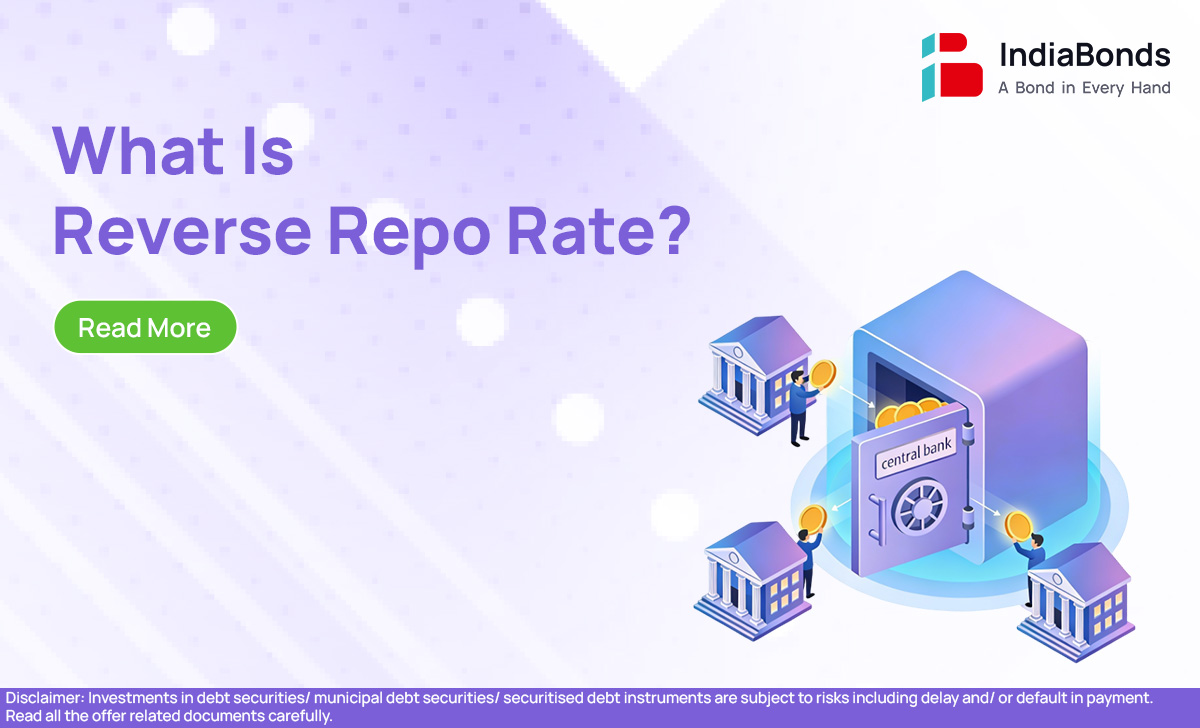
Let’s start with the simplest picture. Imagine banks have extra cash lying around. They don’t want it sitting idle, so they look for a safe place to park it. For them, the RBI is the safest place possible. When they park their surplus funds with the RBI, they earn interest at something called the Reverse Repo Rate.
So, if someone asks what is the reverse repo rate, here’s the most direct answer:
It is the interest RBI pays banks when they deposit their extra money with the central bank.
There’s nothing complicated about the concept itself. Banks are like anyone else—they want to earn safe returns on money that isn’t being used. So when this rate goes up, banks happily park more with RBI. When it goes down, they prefer lending that money elsewhere to earn better returns. It’s a simple behaviour pattern, but it influences a large part of the financial system.




The Role of Reverse Repo Rate in Monetary Policy
- It lets the RBI absorb extra liquidity from the banking system whenever needed.
- Works with the repo rate, forming a range within which short-term market rates tend to move.
- Helps RBI control inflation by drawing money out of active circulation.
- Gives banks a safe, no-stress option to place surplus cash during uncertain periods.
- Influences the broader interest rate environment indirectly.
Current Economic Context
The last several years have been unusual—recovery phases, fluctuating inflation, global uncertainty, and unpredictable growth patterns. All of this affects how RBI uses the Reverse Repo Rate as a tool.
Some of the current forces shaping liquidity are:
- Inflation at times rising faster than expected.
- Strong demand for credit as businesses and consumers return to normal activity.
- Global rate hikes, which influence domestic financial behaviour.
- Banks maintaining more liquidity buffers as a safety habit.
- Economic expansion requiring monetary support without letting inflation run ahead.
Put together, these conditions mean that the RBI uses the Reverse Repo Rate like a dial. Turning it slightly up or down has a direct impact on how much money stays within the banking system and how much spills out into the economy. A small adjustment can cool things down or give liquidity a gentle push forward.
Impact of Reverse Repo Rate on Economy
This is where things connect back to the real world. Even if the Reverse Repo Rate seems distant, it affects almost everything in some chain-like manner.
Here’s how:
- When the rate is higher, banks tend to hold back money and park more with RBI.
- This reduces circulating money and helps ease inflationary pressure.
- Lending conditions change—deposit rates, loan rates, and borrowing appetite adjust accordingly.
- Businesses that depend on fresh credit feel the difference quickly.
- Investors read the rate as a sign of whether the RBI is moving toward tightening or easing liquidity.
So yes, the impact of reverse repo rate doesn’t sit only in textbooks. It flows into everyday life—loan EMIs, savings rates, business financing, and even overall market mood.
Difference between Repo Rate and Reverse Repo Rate
A lot of confusion clears up once the two rates are seen side by side:
- Repo Rate: RBI gives money to banks. Banks borrow from RBI.
- Reverse Repo Rate: RBI takes money from banks. Banks lend to RBI.
- Repo Rate: Used to push liquidity into the system.
- Reverse Repo Rate: Used to pull liquidity out.
- Repo Rate: Higher repo means borrowing becomes costlier.
- Reverse Repo Rate: Higher reverse repo means banks prefer parking funds rather than lending.
If one thinks of these as two taps controlling the flow of money—one opens, the other closes—the picture becomes a lot clearer.
Current Repo Rate in India
To understand the Reverse Repo Rate fully, the repo rate must be mentioned too, because both work together.
- The repo rate is RBI’s main lever to influence borrowing conditions.
- It usually stays higher than the Reverse Repo Rate, maintaining a corridor.
- Loan rates in the banking system track the repo rate more closely.
- A shift in repo rate impacts home loans, car loans, business loans—basically, the interest rate environment.
- Reverse Repo Rate sits below it, absorbing liquidity when needed.
Both are part of the same toolkit, just used for opposite purposes. Repo pushes funds into the economy, reverse repo restrains them. The RBI adjusts both to keep the system balanced—never too tight, never too loose.
Conclusion
When people first hear the term Reverse Repo Rate, it almost feels like something that belongs far away from everyday life. But once someone walks through what it actually does, the picture becomes surprisingly relatable. It plays a quiet but steady role—keeping liquidity in check, making sure inflation doesn’t run ahead, and indirectly fixing the tone for interest rates across the country.
Understanding what is the reverse repo rate isn’t just about knowing a definition. It’s about recognising how the economy holds itself together through small but meaningful adjustments. This rate forms one part of that stitching. Its effect may not be loud, but it’s consistent. And because financial conditions change continuously, the Reverse Repo Rate remains one of RBI’s dependable tools to keep the economy stable while allowing it to grow at its own pace.
FAQs
1. What is the reverse repo rate?
It’s the rate RBI pays banks when they deposit surplus money with the central bank. It helps RBI manage how much liquidity stays in the system.
2. What is the reverse repo rate today?
It varies depending on RBI’s monetary policy decisions. It generally stays slightly under the repo rate.
3. What is a reverse repo?
A reverse repo is when the RBI borrows money from banks for short periods and gives government securities in return.
4. What is meant by a repo rate?
Repo rate is the interest rate at which RBI lends money to banks. This rate influences how much banks charge individuals and businesses.
5. Is reverse repo good or bad?
It isn’t good or bad on its own—it depends on the economic situation. During inflation, a higher reverse repo rate helps. During slow growth, a lower rate supports lending.
6. What happens if RBI increases reverse repo rate?
Banks then prefer parking more of their funds with RBI. This reduces liquidity and slows inflationary pressure.
7. What are the three types of repo?
Typically, they include repo, reverse repo, and term repo, each designed for different liquidity needs.
Disclaimer : Investments in debt securities/ municipal debt securities/ securitised debt instruments are subject to risks including delay and/ or default in payment. Read all the offer related documents carefully.
515













CIN: U67100MH2008PTC178990
SEBI Registration No.: INZ000311637
NSE Member ID - Debt Segment: 90316
BSE Member ID - Debt Segment: 6811
Caution : Beware of fraudsters and impersonators misusing the name of IndiaBonds. Always verify communications and transactions through our official website www.indiabonds.com and mobile application only. Click here for Advisory and Safety Tips.