Search


Sardar Vallabhbhai Patel Jayanti 2026
 210
210
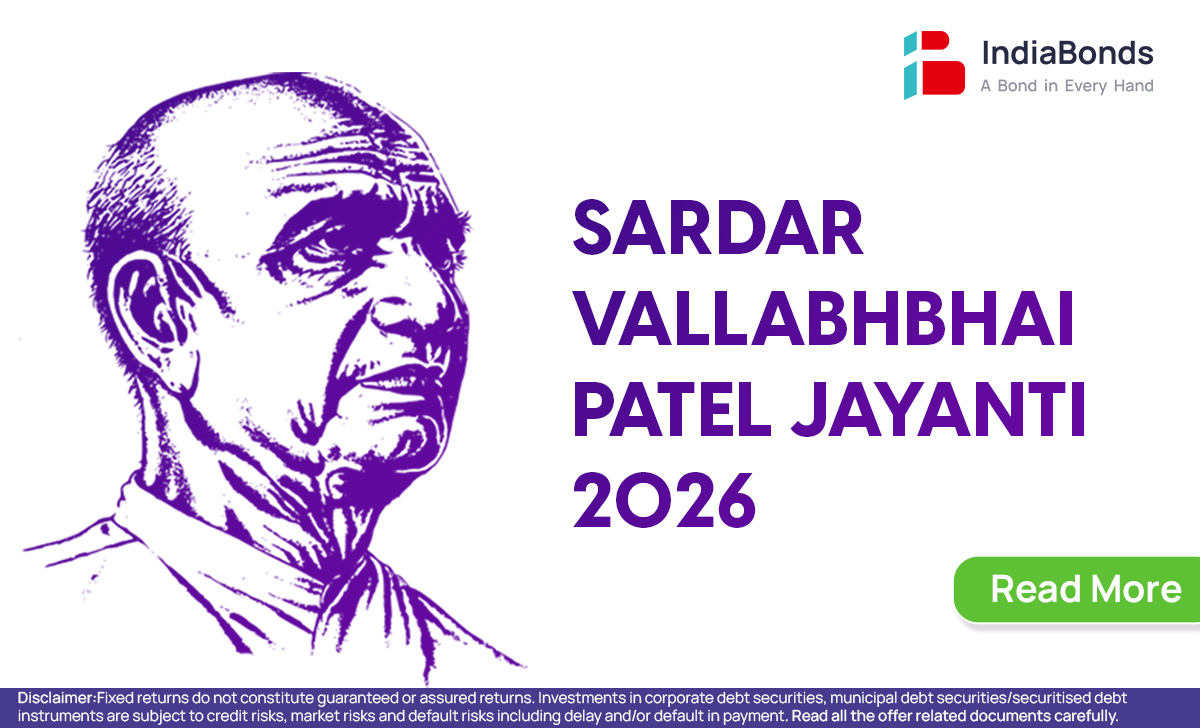
Here is something worth thinking about. The India that exists today — its shape on a map, its borders, the fact that it is one country and not forty or fifty fragmented territories — did not happen automatically. It did not follow naturally from independence. In fact, in the weeks and months after August 1947, it was genuinely unclear whether it would happen at all. Hundreds of princely states, each governed by its own ruler, each with its own interests and fears and ambitions, were suddenly free to make their own choices. Some wanted to join India. Some were undecided. A few had quietly started imagining a future where they answered to nobody. The situation was, to put it plainly, a mess. And into that mess walked one man with a clear head, a steady hand, and absolutely no interest in being talked out of what needed to be done. That man was Sardar Vallabhbhai Patel. Sardar Vallabhbhai Patel Jayanti 2026 is a chance to tell that story the way it deserves to be told — not as a chapter in a history textbook, but as the deeply human, high-stakes, against-the-odds achievement that it actually was.
Origin, History, and Significance of Sardar Vallabhbhai Patel Jayanti
Sardar Vallabhbhai Patel was born on October 31, 1875, in Nadiad — a small, sun-baked town in the Bombay Presidency that most people outside Gujarat could not have pointed to on a map then and probably still cannot now. He came from a farming family. Not poor in the dramatic, literary sense, but not comfortable either. Life required effort, every single day, and there was nobody around handing out exceptions. You got up, you worked, you solved the problems in front of you, and you did not waste much time feeling sorry for yourself about it.
It would be easy to romanticise that upbringing in hindsight — to say it built character, forged resilience, all of that. And maybe it did. But the more honest thing to say is simply this: Patel grew up in a world where results mattered more than intentions, where talking about a problem and actually fixing it were treated as two very different things. That distinction stayed with him forever. It showed up in everything he did.
He worked his way to England, studied law, passed his bar exams, came back to India, and built a legal career that people genuinely respected — not because of who he knew, but because of how good he was at the work. He was doing well. He was settled. And then Gandhi started asking Indians to give up settled and comfortable for something far more uncertain and far more important. Patel thought about it — really thought about it, by most accounts — and then he said yes. He walked away from his career without drama and without looking back. That kind of decision does not come from nowhere. It comes from a person who has already, somewhere along the line, figured out what actually matters to them.
The Bardoli Satyagraha of 1928 was when most of India first truly understood what Patel was. Farmers in the Bardoli region had been handed a tax increase by the British administration — steep, unjustified, and handed down at a time when the harvests had been bad and people were already stretched thin. The anger was real and understandable. What Patel brought to it was something rarer than anger: organisation. He turned a community of frustrated, struggling farmers into a non-violent resistance movement so disciplined and so quietly immovable that it genuinely baffled the colonial administration. There was nothing to arrest, nothing to suppress, no violence to justify a crackdown — just an entire community that had decided, calmly and collectively, that it would not comply. The British backed down. They suspended the tax hike and agreed to an independent inquiry. And the women of Bardoli — who had watched all of it, who had lived through all of it — started calling him “Sardar.” Not because anyone told them to. Not because it was politically strategic. Because it was simply true. He was their leader. The title fit. It followed him for the rest of his life.
Then came 1947, and the work that nobody else could have done quite the way he did it. When the British left, they left behind more than 560 princely states in various states of indecision. Some rulers signed accession documents quickly and without much fuss. Others dragged their feet, hoping to negotiate better terms or simply waiting to see what happened. A handful had convinced themselves they had real options — that independence, or a deal with Pakistan, or some creative third path, was genuinely available to them. Patel, working with V.P. Menon, dealt with each situation on its own terms. He was patient with the ones who needed patience. He was blunt with the ones who needed bluntness. He moved quickly when speed was the advantage and slowly when time was on his side. He understood, instinctively, that you do not apply the same approach to every problem just because it worked somewhere else. What he achieved — the peaceful integration of the overwhelming majority of those states into the Indian Union, in a matter of months, during one of the most chaotic and uncertain periods in the country’s history — is the kind of thing that sounds straightforward when you summarise it in a sentence and becomes staggering when you actually sit with the details.
Sardar Vallabhbhai Patel Jayanti is significant because it refuses to let that staggering thing become just a sentence. It insists on the full story. The difficulty of it. The human beings behind it. The fact that it was not inevitable — and that someone had to make it happen anyway.
When It Is Celebrated
October 31st. The date has belonged to Sardar Vallabhbhai Patel since 1875, when he was born in Nadiad. For decades after his death in 1950, the anniversary was observed with the kind of sincerity that does not always translate into visibility — quiet commemorations, official wreaths, the sort of recognition that acknowledges without quite celebrating.
In 2014, something shifted. The Government of India declared October 31st as Rashtriya Ekta Diwas — National Unity Day. The framing was deliberate: this should not be a day of passive reverence. It should be a day of active, conscious renewal — a moment when the country collectively chooses to recommit to the unity that Patel bled for, negotiated for, and in his final years quietly worried about. Unity, the declaration seemed to say, is not a gift that keeps giving on its own. It needs tending. It needs people who understand its value and choose it, again and again, even when division would be easier.
Sardar Vallabhbhai Patel Jayanti 2026 lands on a Saturday. That small logistical fact opens something up. A Saturday means families are not racing out the door. Students are not half-listening with one eye on tomorrow’s schedule. Communities have breathing room to actually participate — to show up, to engage, to make the day something more than a notification on a phone that gets swiped away between meetings.
How and Where Sardar Vallabhbhai Patel Jayanti Is Celebrated?
Stand at the base of the Statue of Unity in Kevadia, Gujarat, and look up. At 182 metres, it is the tallest statue in the world, and the scale of it does something to a person that no photograph quite prepares them for. Every year on October 31st, this is where the national celebration finds its heartbeat. Officials gather, ceremonies are conducted, speeches are made — all of it appropriate, all of it deserved. But what gives the day its actual texture is not the stage. It is the people who fill the space around it. Families who drove hours to be there. Young people seeing it for the first time. Older visitors who remember what it felt like before the statue existed, when Patel’s contribution felt somehow undercelebrated. They are all there for different reasons, but they are all there — and that, in its own quiet way, is exactly the point.
The Ekta Daudh, the Unity Run, begins here too, with participants of every age setting off together through the morning air. No prizes. No leaderboard. No one checking finish times. Just a group of people choosing to move in the same direction, which is a more profound gesture than it might initially seem, and one that Patel would almost certainly have appreciated for its practicality.
Across the country, the day unfolds in as many ways as there are communities observing it. The schools that take it seriously do not just hold assemblies — they give students actual questions to argue over. What alternatives did Patel have? What would have happened if a particular state had not acceded? Were all his methods justified? These are real questions with complicated answers, and asking them treats students as thinkers rather than just audiences. That matters. The Sardar Vallabhbhai Patel National Police Academy in Hyderabad has its own deep relationship with the day — because Patel did not just unify India politically. He understood that a functioning democracy requires functioning institutions, and he worked to build them from scratch at a time when nothing was guaranteed.
For those who want something quieter and more personal, Gujarat offers heritage walks through Anand and Karamsad — the towns that shaped Patel before the history books got hold of him. There is something genuinely moving about walking a street that he once walked, standing in a place that was ordinary to him before he became extraordinary. It makes him real in a way that statues and ceremonies sometimes cannot. He was a person, in a specific place, with a specific childhood — and the distance between that person and the man who held India together is a distance worth trying to feel.
Documentary screenings, community pledge-taking, thoughtful long-form pieces and conversations that spill across dinner tables and social media and school corridors — all of it fills out a day that, at its truest, does not feel like an obligation anyone is fulfilling. It feels like a country that has chosen, voluntarily and with full awareness, to remember something it cannot afford to forget.
FAQs
Q: Is Sardar Vallabhbhai Patel Jayanti a holiday?
A: It is officially observed as Rashtriya Ekta Diwas — a nationally recognised day across India. Whether it means a day off from work or school depends on the state and institution. Many central government offices and schools do hold formal observances, and some states treat it as a restricted holiday. But here is the thing: Patel was not a man who measured importance by whether something gave people a day off. He measured it by whether it got done. The significance of October 31st was never really about rest. It was about remembrance — and remembrance, done properly, takes more out of a person than a regular workday ever could.
Q: Who was Sardar Jayanti on 31 October?
A: October 31st is the birthday of Sardar Vallabhbhai Patel — a farmer’s son from a small Gujarat town who became a barrister, walked away from that career to join the freedom movement, led one of the most remarkable non-violent campaigns of the colonial era, and then, as India’s first Deputy Prime Minister and Home Minister, spent his final years doing the unglamorous, enormously consequential work of convincing more than 560 princely states to become part of one country. He did not do it with speeches. He did it with preparation, persistence, and a quality that is genuinely rare in people of any era — the ability to stay completely focused on what actually needed to happen, without getting distracted by how difficult it was or how much credit he would receive for doing it. The Iron Man of India is not a title that was handed to him. It is a title he earned, quietly and completely, through the work itself.
Q: Which Jayanti is on 31 October?
A: October 31st is Sardar Vallabhbhai Patel Jayanti, celebrated nationally as Rashtriya Ekta Diwas or National Unity Day. But more than a name and a date, it is a question the country asks itself once a year: do we still understand what we have, how close we came to not having it, and what it still asks of us to keep it? Patel never framed unity as a gift or a given. He treated it as a responsibility — something that had to be built, maintained, and chosen, again and again, by the people who lived within it. That framing has not aged a day.
Fixed returns do not constitute guaranteed or assured returns. Investments in
corporate debt securities, municipal debt securities/securitised debt instruments are subject to
credit risks, market risks and default risks including delay and/or default in payment. Read all the
offer related documents carefully. The inventories offered on the platform offer interest ranging
from 5% to 12.2% fixed returns p.a.
210