Search


CPI vs WPI: Difference Between Consumer And Wholesale Price Index Explained
 1.43K

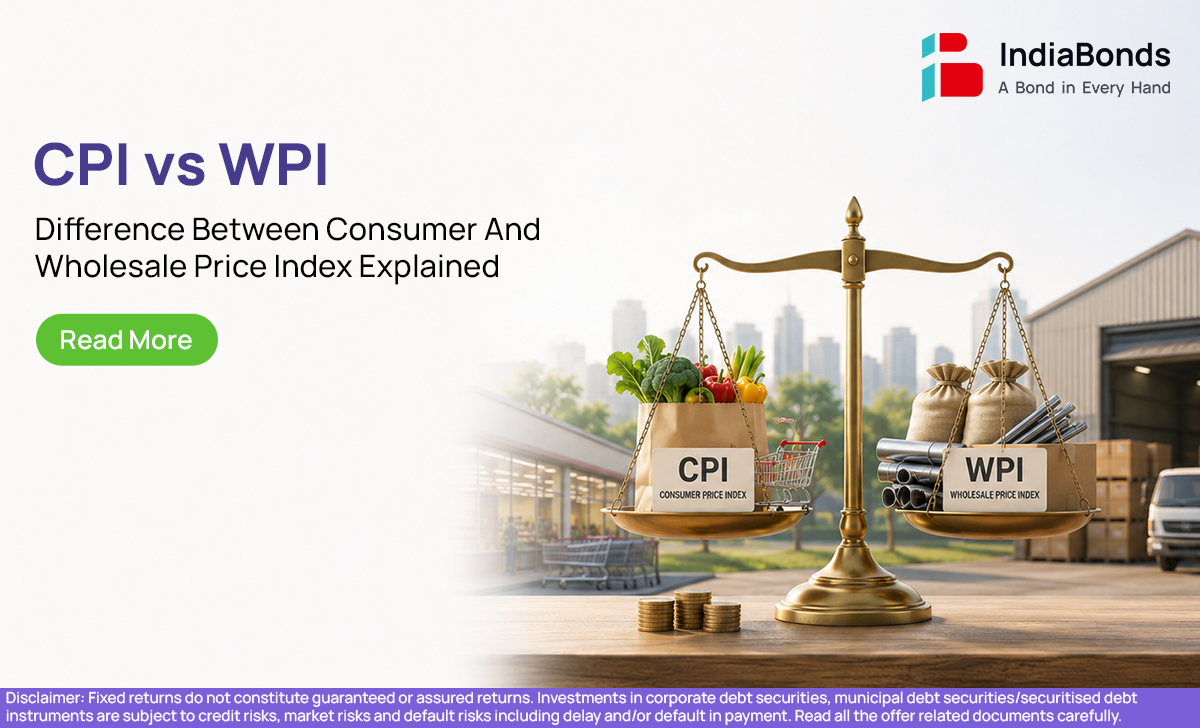
Inflation is one of those financial terms that everyone hears, yet for most of us, it feels like an invisible force that just makes life a bit more expensive. In India, the economy’s “temperature” is measured primarily by two different gauges: the Consumer Price Index (CPI) and the Wholesale Price Index (WPI). While both try to measure how prices are moving, they actually look at the world from very different perspectives. Understanding the story behind cpi and wpi isn’t just for economists; it’s a vital tool for anyone trying to protect their hard-earned money and make sense of their daily expenses.
What Is CPI (Consumer Price Index)?
The Consumer Price Index, or CPI, is the metric that hits closest to home—literally. It tracks the price changes of the everyday basket of goods and services that households actually buy. Think of it as a record of your typical monthly spending: the groceries you pick up at the local shop, your electricity bill, the rent you pay, and even the cost of a doctor’s visit.
Because CPI tracks the retail prices you see at the checkout counter, it is widely considered the truest measure of the “cost of living”. When you hear people complaining that their monthly budget isn’t stretching as far as it used to, they are talking about the reality measured by CPI. Comparing the consumer price index and wholesale price index shows us that CPI is much more sensitive to what families actually care about. For a family planning their future, CPI is the most accurate signal of how inflation is quietly nibbling away at their purchasing power.
What Is WPI (Wholesale Price Index)?
On the other side of the fence, we have the Wholesale Price Index (WPI). This index doesn’t look at retail shelves; it looks at the wholesale or “factory gate” level. WPI tracks price shifts for goods traded in bulk between businesses—things like raw steel, crude oil, coal, and semi-finished manufactured goods.
Think of WPI as an early-warning system. It captures cost changes before they reach the consumer. If the price of raw materials jumps at the factory, that cost eventually travels down the supply chain until it hits the retail price tag. The dynamics of the consumer price index vs wholesale price index reveal this interesting “trickle-down” effect. While you might not notice a price hike at the store today, manufacturers and businesses are already navigating the pressure of rising WPI numbers.
CPI vs WPI: Core Differences
| Feature | CPI | WPI |
| Focus | Retail Price (End Consumer) | Wholesale Price (Producer/Bulk) |
| Scope | Includes Services | Mainly Goods |
| Primary Goal | Reflects Cost of Living | Reflects Producer Costs |
When investors analyze cpi vs wpi, the differences often come down to how they are built. CPI cares deeply about services—the things we consume daily. WPI is obsessed with manufactured products and commodities. Consequently, when the cpi and wpi reports land, they often tell two different stories: one might show industrial stability while the other signals a crunch in the household kitchen.
Why CPI And WPI Move In Different Directions?
It is often frustrating to see one index climbing while the other stays flat. This happens for a few simple reasons:
- The goods tracked in the WPI basket are vastly different from the consumption basket of a household tracked by CPI.
- There is a natural “transmission lag” where businesses absorb raw material price increases before passing them to the final buyer.
- WPI is heavily weighted toward energy and industrial raw materials, while CPI puts more weight on food and essential services.
These factors are why comparing the consumer price index vs wholesale price index is like comparing apples to oranges; they are tracking different stages of the economic life cycle.
Which Inflation Measure Does RBI Use For Policy?
The Reserve Bank of India (RBI) has made its choice clear: it treats CPI as the primary anchor for monetary policy. Policymakers look at the consumer price index and wholesale price index difference to decide whether to hike or cut interest rates.
Why? Because CPI is the most direct reflection of how inflation hits the common citizen’s pocket. The RBI’s goal is to keep life affordable, and by targeting CPI, they can adjust interest rates to keep price spikes from spiraling out of control. It is their way of keeping the value of your rupee steady.
How Rising CPI/WPI Affects Your Investments?
Inflation acts like a silent tax on your savings. To handle it, you need to understand the trends:
- During high inflation, the real returns on traditional savings or long-term bonds can struggle to keep up.
- High WPI figures can squeeze company profit margins, which might eventually influence how your stocks perform.
- When both indicators show rising pressure, many people naturally shift toward “inflation-hedging” assets like gold or real estate.
Grasping the consumer price index and wholesale price index difference helps you look beyond the noise and build a smarter, tougher financial plan.
Conclusion
Both CPI and WPI are vital tools, but they play different roles. One keeps tabs on your daily life, while the other monitors the health of the industrial engine. By understanding the dance between cpi vs wpi, you gain a clearer picture of where the economy is headed. Keeping an eye on the consumer price index and wholesale price index is truly the best defense you have against the quiet, persistent risks of inflation.
FAQs
1. What commodities have the highest weightage in India’s WPI basket?
Fuel, power, and manufacturing goods carry the most weight here.
2. How does India’s new CPI series (2026 update) differ from the older one?
The updated series uses modern consumption patterns and refreshed item baskets to stay relevant.
3. What is the Laspeyres index method used to calculate CPI and WPI?
It’s a standard way of calculating price changes by keeping the “basket” of goods fixed to a base year.
4. Why does RBI prefer CPI over WPI for inflation targeting?
Because it is a much more direct reflection of the cost of living for the general population.
5. How does WPI impact businesses and manufacturers in India?
Rising WPI usually signals higher production costs, which forces businesses to reconsider their profit margins or retail pricing.
6. Which is a better indicator of inflation in India: CPI or WPI?
It depends—CPI for household and policy impact, WPI for industrial analysis.
7. How frequently are CPI and WPI data released in India?
Generally, both are updated monthly.
8. How do CPI and WPI affect interest rates in India?
Usually, when CPI inflation gets too high, the RBI raises rates to cool down consumer demand.
Disclaimer: Fixed returns do not constitute guaranteed or assured returns. Investments in corporate debt securities, municipal debt securities/securitised debt instruments are subject to credit risks, market risks and default risks including delay and/or default in payment. Read all the offer related documents carefully.
1.43K