

Download IndiaBonds App

 Search


Health Insurance Policies in India
 270
270
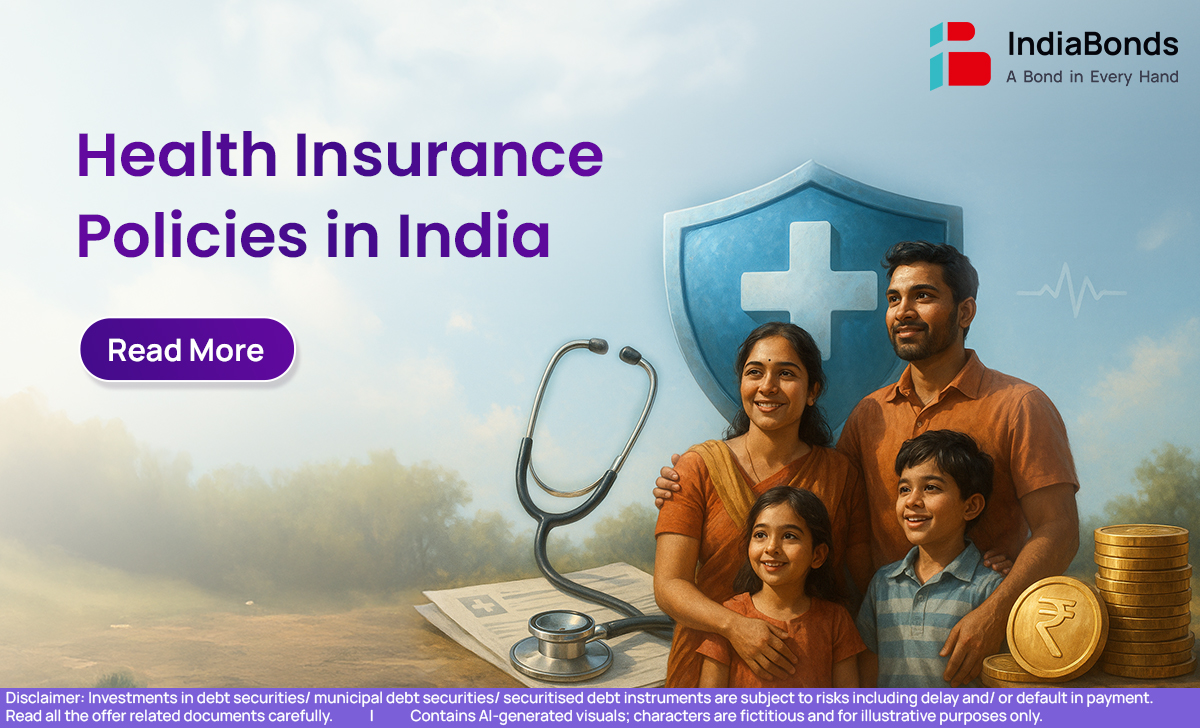
When Riya from Indore slipped on a wet stair and landed in a hospital for a minor surgery, the billing counter looked scarier than the stitches. Her father held a small folder with policy papers and the staff simply swiped a card for cashless treatment. The family returned home without breaking their fixed deposit. That quiet moment shows why health insurance matters in everyday Indian life. Medical costs rise fast, good hospitals are busy, and one long bill can erase years of savings. This guide explains health insurance policies in India in very plain words so any family can protect money and health with simple choices that actually work.
Factors To Consider Before Choosing Health Insurance Plans in India
A person first checks the sum insured. In large cities like Mumbai or Bengaluru, five lakh often feels small, so many families prefer ten lakh or more. Next comes the hospital network. A plan is useful only if nearby trusted hospitals accept the card for cashless care. Room rent limits and sub limits require attention because they decide which room a patient can take and how much the plan pays for specific procedures. Waiting periods for pre existing diseases such as diabetes decide when coverage starts. Co pay means the customer pays a part of the bill, which seniors often see in their plans. The claim process should be simple through an app or a responsive helpline. Finally, the premium must fit the budget for many years, not just the first year, because health insurance is a long journey.
Key Benefits of Health Insurance Plans in India
A good plan pays for hospitalization, day care surgeries that finish on the same day, and pre and post hospital expenses for tests and medicines. Many cover ambulances and offer free health checkups every year. Some plans restore the sum insured if it gets used up in a year. Tax saving under section 80D helps salaried people and business owners. Cashless treatment lets a patient focus on care while the insurer and hospital settle the bill. Mental health benefits and cover for modern treatments are now common. For families, these benefits of health insurance turn a medical event into a manageable moment rather than a money shock. The section title itself points to the Key Benefits of Health Insurance Plans in India, and they all aim to keep savings safe.
Types of Health Insurance Plans in India
The most used plan is an individual policy for one person. A family floater covers spouse, children, and sometimes parents under a single sum insured that they share. Senior citizen plans suit elders with features like higher co pay but wider coverage for age related illness. Top up and super top up plans add extra coverage at a lower cost once a basic amount gets crossed. Critical illness plans pay a lump sum on diagnosis of listed diseases such as cancer. Maternity covers support planned births, though they come with waiting periods. Group cover from employers is helpful but it usually ends when a person changes jobs. These are the common types of health insurance plans in India, and one can mix them if needed.
Understand Eligibility for Health Insurance
Insurers welcome most healthy people from a few months old to very high ages, with lifetime renewability now common. Parents can include children as dependents until a certain age, after which youngsters buy their own cover. For older people or those with medical history, an insurer may ask for medical tests or add a waiting period for those conditions. Basic KYC documents, address proof, and medical declarations are standard. People covered by government schemes like Ayushman Bharat still choose private health insurance when they want treatment at a specific private hospital, because private rooms and shorter queues matter during stressful times.
Choosing the Best Health Insurance Plans in India
The phrase best health insurance plans sounds like a winner list, but the real answer depends on the person. A young couple in Pune might need a family floater with maternity benefits in the future. Parents in Kochi may prefer a senior friendly plan with an easy claim desk. Someone in Delhi who already has group cover may add a super top up for higher protection at a modest cost. A simple way is to list hospitals a family trusts, pick the plans that support those hospitals, choose a sum insured that matches city prices, and check limits and waiting periods. When the plan fits these points and the premium is steady across renewals, it becomes one of the best health insurance plans for that family. Comparing two or three options and reading sample policy wordings for half an hour saves years of confusion.
Why Do You Need Health Insurance?
Families need health insurance because illness does not send a reminder before arriving. Treatment for a fracture, dengue, or a heart procedure can cross lakhs in a few days. Insurance protects savings meant for children’s education, a small business, or retirement. It also helps people use better hospitals without worrying about deposits at admission. Some ask, why do you need health insurance if one is fit and eats well. The honest answer is that even fit people get unexpected problems and a single night in an intensive care unit can change a bank balance. A policy is a seat belt for money.
Features of the Health Insurance Policy
Important features include the sum insured, room rent rules, and the list of exclusions. Restoration benefit brings back the cover if a big claim empties it. No claim bonus increases coverage when a year passes without claims. Many plans cover daycare treatments, cataract limits, and modern procedures like robotic surgeries. Some offer home care or telemedicine when a doctor signs off. The fine print around waiting periods for maternity and pre existing illness shapes real world usefulness. When a person reads these features slowly with examples in mind, the health insurance policy becomes clear and not scary.
Things to Consider Before Buying a Health Insurance Plan in India
A family should aim for lifetime renewability so the cover does not stop at a fixed age. A plan with an in house claim team often resolves issues faster than a third party administrator, though both can work well. The insurer’s app, the reach of the call center, and the clarity of the policy wordings matter during stressful nights. Trusted hospitals near home should be on the network list. People who travel between cities for work can check nationwide cashless coverage. If parents live in another city, a separate senior plan for them may be better than adding them to a floater. Clear answers to these simple points make any health insurance choice stronger.
Conclusion
Health cover is not a luxury for rich families. It is a basic safety tool for every Indian household, whether they live in a big metro or a small town. With health insurance policies in India, a family can turn a scary bill into a manageable file. The plan that fits the city, hospital choice, and budget is the right one. Once selected, the person keeps the premium on auto pay, stores soft copies of the policy, and tells family members how to use the card. In real emergencies, that small folder at the billing counter makes all the difference.
FAQ
Which insurance is best for health in India?
There is no single winner for everyone. The best health insurance plans are those that cover trusted hospitals, offer the right sum insured for the city, have clear limits, and keep premiums affordable at renewal.
What is the top 5 health insurance?
Lists change often. Rather than chase a top five, a person should shortlist plans that meet their needs, check claim service reviews in their city, and read policy wordings to avoid surprises.
Who is the top 5 insurance company in India?
Many large insurers serve India well. The sensible method is to focus on claim support near the family’s hospitals, the size of the network, and features that match personal needs rather than a national ranking.
Which health scheme is best?
Government schemes such as Ayushman Bharat help eligible families with basic coverage. For middle income households, a private health insurance plan with cashless access at nearby hospitals usually works best, and a super top up can add higher protection.
Disclaimer : Investments in debt securities/ municipal debt securities/ securitised debt instruments are subject to risks including delay and/ or default in payment. Read all the offer related documents carefully.
270






CIN: U67100MH2008PTC178990
SEBI Registration No.: INZ000311637
NSE Member ID - Debt Segment: 90316
BSE Member ID - Debt Segment: 6811
Caution : Beware of fraudsters and impersonators misusing the name of IndiaBonds. Always verify communications and transactions through our official website www.indiabonds.com and mobile application only. Click here for Advisory and Safety Tips.