Search


The Power of Compound Interest Explained
 885
885
Introduction
To be totally honest for a second. Money stuff can be… a lot. It’s like everyone’s speaking a secret language you’re not in on, right? Well, I’m about to let you in on the one financial secret that’s actually, like, super simple. It’s called compound interest, and it’s basically the only thing you need to know to start feeling less stressed about money. Forget all the complicated jargon. This is about making your money work so hard for you that it starts having little baby moneys. And yeah, it’s as cool as it sounds.
What Is Compound Interest?
So, what even is it? Think of it this way: You have ₹100. Simple interest is when that ₹100 earns you ₹5, and that’s it. It’s a one-and-done deal. Compound interest? That’s when that ₹100 earns ₹5, but then the next time it goes to work, it earns ₹5 on the ₹100 and a tiny bit more on the ₹5 you already earned. It’s like you hired a tiny helper, and that helper’s job is to go out and bring back more tiny helpers. And those new helpers go out and bring back even more helpers. Your money literally has a growth engine built right in.
How Compound Interest Works
Let’s just pretend you have ₹1,000. Like, in a savings account. And it’s earning 10% a year. Pretty sweet, right?
First year: You get ₹100. Super simple. Now you have ₹1,100. No biggie.
Second year: Here’s the mind-blowing part. The bank doesn’t just give you another ₹100. Nah. They look at your new balance, ₹1,100, and give you 10% of that. So you get ₹110. Now you’re at ₹1,210.
Third year: Your bank gives you 10% of ₹1,210. That’s ₹121! See? The amount you earn each year just keeps getting bigger, and you haven’t done a single extra thing. It’s like your money is on a constant energy drink.
The Power of Compound Interest
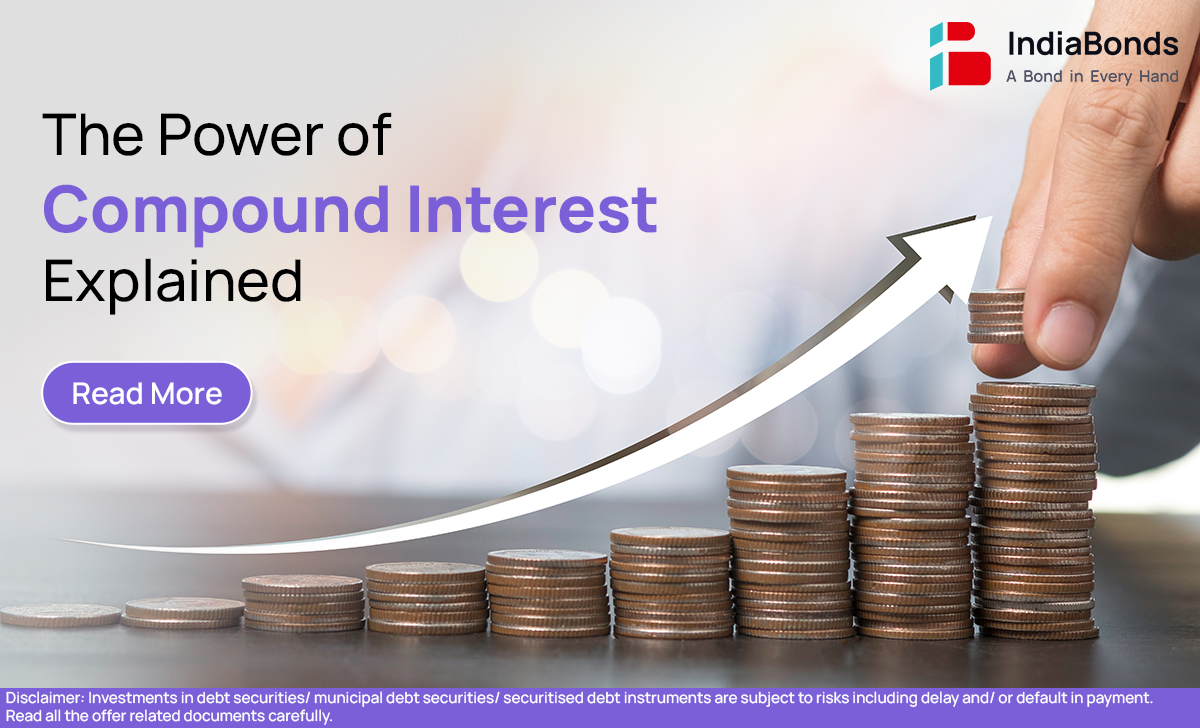
For real, the biggest thing with this is just giving it time. It’s like a magical plant. You water it a little bit at the start, and for a while, it just looks like a tiny little sprout. But after years and years, it turns into a massive tree with deep roots. Compound interest is totally the same. You don’t have to be rich to start. You just have to start, like, yesterday. Future You is gonna high-five you so hard for that.
Compounding Interest Periods
This is a fun little detail. How often does your money get its little interest party? It could be daily, monthly, or yearly. The more often it happens, the better. Think of it like a party you throw for your money. A once-a-year party is cool, but a daily party? That means your money is constantly getting those little boosts and having more babies sooner.
The Effect of Compounding Periods
Okay, so you and your friend both have ₹1,000 at 5%. Your friend’s bank only compounds once a year. Your bank compounds every single month. By the end of the year, your friend has ₹1,050. You’ll have, like, a rupee more. I know, right? Who cares about a rupee? But get this: over 30 years, that little rupee grows into a lot more. It’s a tiny difference that turns into a big deal.
Example of Compound Interest
Let’s just daydream a little. What if you’re like, 25, and you put away just ₹5,000 a month into something that averages 7% a year?
After 10 years, you’ve put in ₹60,000. Not too shabby. But your account would be worth almost ₹87,500! That’s almost 30 grand you got for free.
But wait, hold up. By the time you’re 55, you’ve put in ₹180,000 of your own money. Your account, though? It’s over ₹612,000! You made over four hundred grand just by being consistent. That’s insane!
Pros and Cons of Compound Interest
Let’s get down to the real talk.
The Good Stuff (Pros):
- It’s your secret money hack: This is how regular people get rich. Seriously.
- It’s totally passive: You don’t have to do anything. Your money does all the work.
- It’s a huge stress-reducer: Knowing this is working for you makes you feel so much better about the future.
The Bad Stuff (Cons):
- It’s a double-edged sword: It works just as hard against you with high-interest debt, like on a credit card.
- It’s not instant gratification: You have to be patient. It’s a marathon, not a sprint.
Advantages Explained
The biggest advantage is that it’s like a superpower for your money. It’s what allows you to start small and end up big. It’s the reason why your money doesn’t just sit there—it goes out and makes more friends and grows your squad.
Disadvantages Explained
Listen, the biggest mistake people make is not paying off high-interest debt first. That debt is compounding against you. It’s like having a team of evil debt soldiers taking over your money army. You gotta defeat the enemy first.
Compound Interest in Investing
When you invest in things like stocks or bonds, they sometimes give you dividends or interest. When you tell your investment company to automatically reinvest that money, you’re basically telling your money army to use all the new treasure it found to get even bigger. Smart, right?
Tools for Calculating Compound Interest
Don’t even try to do this with a pen and paper. Just google “compound interest calculator.” There are tons of super friendly, easy-to-use sites out there. You just plug in your numbers and it shows you your future. It’s like a financial fortune teller.
Approach One: Multiplication
To get a quick feel for it, you can just do the simple math: ₹1,000 * 1.10 = ₹1,100. It’s literally that easy to see the first step.
Approach Two: Fixed Formula
Look, there’s a big ol’ formula out there for this, but honestly, you don’t need to know it. Just trust that the calculators use it to do the work. It’s A = P(1 + r/n)^(nt). Just let the computer handle that.
Online Calculators for Compound Interest
These are the best. They are designed for us normal people. You just type in your starting money, how much you’ll add each month, the interest rate, and how many years you’ll let it chill. It’ll show you a chart and everything. It’s a game-changer.
How Can I Tell if Interest is Compounded?
Check your bank statement or the details for your investment. It’ll usually say something like “compounded daily” or “compounded annually.” If you don’t see it, just ask the bank person. It’s not a weird question, I promise.
What Is a Simple Definition of Compound Interest?
It’s when your money earns money, and then that new money starts earning its own money.
Who Benefits From Compound Interest?
Literally anyone who has money they’re not spending right now. It’s for the person who wants to start saving and is cool with waiting for it to do its thing.
FAQ
Q: How does the power of compound work?
A: It’s like a snowball. You start small, and as it rolls, it gets bigger, and that bigger size makes it collect even more snow faster. Your money gets bigger, and that bigger money makes even more money.
Q: What is the power of compound interest?
A: The power is that it’s a way to get rich slowly and steadily, turning a little bit of money into a lot over time. It’s the secret to financial freedom, dude.
Q: How magical is the power of compound interest?
A: It’s not magic, it’s just math! But it feels like magic when you see your money growing without you having to do anything extra. It’s the closest thing to free money you’ll ever find.
Q: What is power of compounding with an example?
A: You put ₹100 in an account. In a year, you get ₹10 interest, so you have ₹110. The next year, you get 10% of that ₹110, which is ₹11. Your money made its own money. See? Simple.
Disclaimer : Investments in debt securities/ municipal debt securities/ securitised debt instruments are subject to risks including delay and/ or default in payment. Read all the offer related documents carefully.
885