

Download IndiaBonds App

 Search


Makar Sankranti 2026 – Date, Timings, Significance, and Celebrations
 405
405
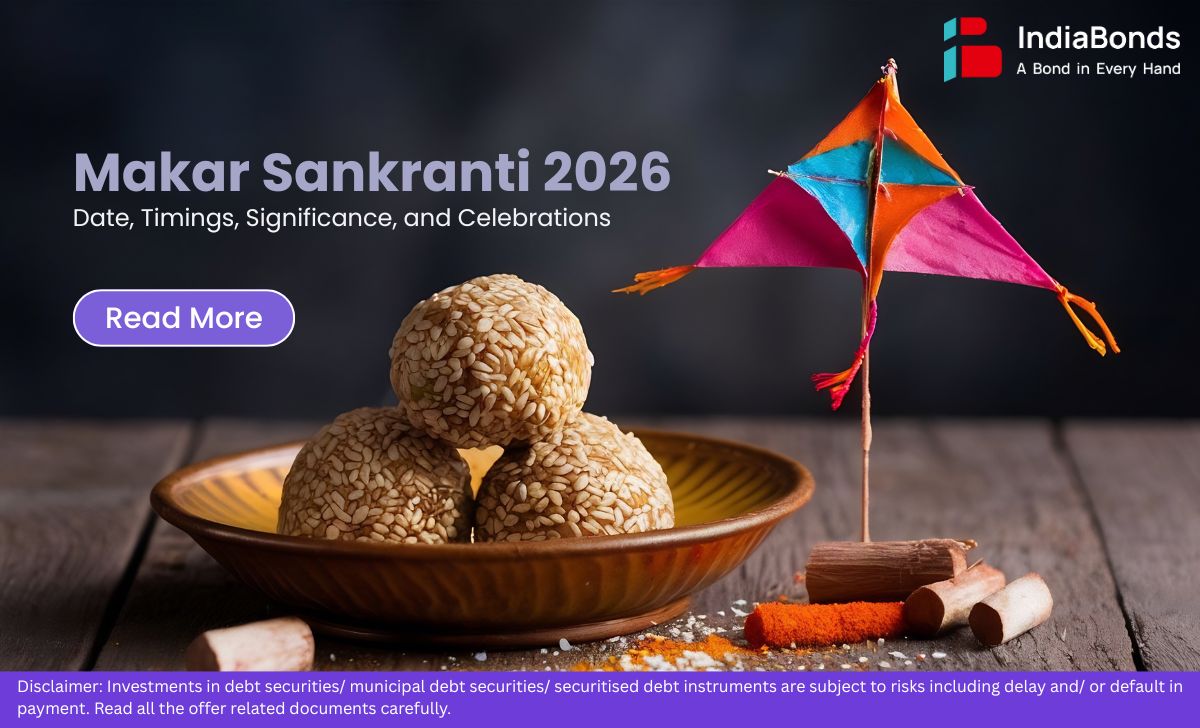
In many homes, makar sankranti is not something people “wait for” the way they wait for a big event. It quietly shows up in the background of January—through sunlight that starts feeling dependable again. The mornings remain chilly, but afternoons look a little softer. Terraces get swept almost absent-mindedly. Someone checks old kites, finds a tangled reel, and smiles anyway. In the kitchen, til and gud reappear like an old winter habit. That’s why the makar sankranti date is easy to remember—it feels like a seasonal shift, not a reminder.
Makar Sankranti 2026 Date and Timings
For anyone searching when is makar sankranti 2026, the widely observed date is Wednesday, 14 January 2026. Because it follows the Sun’s movement into Makara (Capricorn), the date stays fairly steady from year to year. Timings matter to many families, but usually in a very lived way: they want the day to start “properly.” Some households prefer sunrise Surya worship simply because that’s how it has always been done. Others check their local panchang and plan puja, charity, or a temple visit around the Sankranti moment. Most follow what their home has trusted for years.
Spiritual Meaning of Makar Sankranti
The meaning of makar sankranti is often explained as the beginning of Uttarayan when the Sun enters Makara. Yet for most people, the spiritual meaning is less about the definition and more about what the day gently encourages. It’s seen as a turn toward light—outside as days slowly lengthen, and inside as one tries to become steadier. Many treat it like a small reset that doesn’t need noise: starting the morning calmly, holding back a sharp comment, letting go of unnecessary irritation, and choosing discipline over impulse. It isn’t a festival of sudden change. It’s a festival of better direction.
Significance in Hindu Tradition
The significance of makar sankranti in Hindu tradition is closely tied to Surya Dev—honouring the Sun as the steady force behind seasons, harvest cycles, and life’s rhythm. Worship on this day is often simple and sincere, almost like acknowledging something constant rather than asking for something grand.
- Surya arghya (offering water) and brief prayers are common.
- Holy baths and temple visits are observed in many regions.
- Daan (donation) is central—especially food grains and winter essentials.
This balance of devotion and giving is why the celebration of makar sankranti feels rooted in faith and care at the same time.
Rituals and Observances of Makar Sankranti 2026
The rituals and observances of makar sankranti 2026 often feel small, but they carry the comfort of repetition—done year after year because they still feel right. Many families begin by cleaning the home, not as a display, but because a cleaner space makes the day feel lighter. Mornings usually start earlier. There is often a quiet pause before the day becomes busy: a diya lit, water offered to the Sun, a short prayer said without rushing. And then the kitchen takes over, because seasonal food is part of the festival’s language.
Common observances include:
- Early bath and wearing clean clothes
- Surya puja / arghya at home or a nearby temple
- Preparing til-gud dishes (a makar sankranti special in many states)
- Sharing sweets with neighbours and elders
- Charity or service—food, blankets, or warm clothing
For anyone searching makar sankranti what to do, these everyday gestures are the simplest answer.
Makara Sankranti Phalam 2026
Makara Sankranti Phalam 2026 refers to traditional “phalam” interpretations linked to the Sun’s entry into Capricorn. The tone is usually steady and practical. Capricorn is commonly associated with patience, discipline, and long-term effort, so many people see this phase as supportive for consistency—building routines, sticking to commitments, and focusing on what matters without chasing quick results. In a way, the season itself reinforces the same lesson. Winter doesn’t change overnight. Outcomes don’t either. Results arrive when effort has been sustained long enough for time to do its quiet work.
Celebrations Across India in 2026
One reason makar sankranti feels so widely loved is that it belongs everywhere, yet it looks different almost everywhere. Makar sankranti 2026 will be celebrated under different names and customs—shaped by local weather, harvest rhythms, and community life. Still, the feeling underneath stays familiar: winter softening, sunlight strengthening, and people gathering in ways that feel warm and close.
- Tamil Nadu (Pongal): Multi-day harvest thanksgiving where cooking and family rituals revolve around gratitude.
- Punjab & Haryana (Lohri): Bonfires and folk songs the night before—winter met with warmth, music, and togetherness.
- Gujarat & Rajasthan (Uttarayan): Kite flying turns rooftops into lively meeting points; the sky becomes part of the celebration.
- Maharashtra (Tilgul): Families exchange sweets and goodwill—another makar sankranti special that gently reinforces sweet speech and harmony.
- UP/Bihar (Snan and community meals): Holy dips in some towns, and comforting community food traditions in many families.
This variety is exactly why the celebration of makar sankranti feels deeply local and unmistakably pan-India.
Conclusion
Makar Sankranti doesn’t need spectacle to feel meaningful. It matters because it marks a real turning point—both in the Sun’s journey and in the season people experience day by day. The makar sankranti date becomes a reminder that brighter days return gradually, and steady change still deserves respect. Makar sankranti 2026 offers a calm reset: a cleaner start, a kinder gesture, a sweet shared without fuss, and a donation made with sincerity. The festival leaves behind quiet reassurance—light increases, step by step.
FAQ
1. When is Makar Sankranti 2026?
It is widely observed on 14 January 2026.
2. What are the auspicious timings for Makar Sankranti 2026?
Many families follow their local panchang. Some prefer sunrise worship, while others plan puja and charity around the Sankranti moment.
3. Why is Makar Sankranti celebrated?
It marks the Sun’s entry into Capricorn and the beginning of Uttarayan, traditionally seen as a favourable solar phase.
4. What is the spiritual significance of Makar Sankranti?
It symbolises moving toward light and clarity—often expressed through prayer, discipline, and goodwill.
5. How is Makar Sankranti celebrated across India?
Through regional forms like Pongal, Lohri, Uttarayan, tilgul exchanges, kite flying, and local community rituals.
6. What are the common rituals of Makar Sankranti 2026?
Surya worship, sesame-jaggery foods, charity, and time with family or elders are common.
7. What is Makara Sankranti Phalam in 2026?
It refers to traditional interpretations linked to the solar transition, often associated with steadiness and long-term effort.
8. Is Makar Sankranti the same as Pongal or Lohri?
They are connected by the same seasonal and solar shift but celebrated differently based on regional tradition.
9. Which mantra is chanted for Surya Dev on this day?
Many households chant Surya mantras and the Gayatri Mantra, depending on family tradition.
10. Why is kite flying associated with Makar Sankranti?
In several regions, kite flying celebrates open skies and longer days, and it has become a joyful community tradition.
Disclaimer : Investments in debt securities/ municipal debt securities/ securitised debt instruments are subject to risks including delay and/ or default in payment. Read all the offer related documents carefully.
405






CIN: U67100MH2008PTC178990
SEBI Registration No.: INZ000311637
NSE Member ID - Debt Segment: 90316
BSE Member ID - Debt Segment: 6811
Caution : Beware of fraudsters and impersonators misusing the name of IndiaBonds. Always verify communications and transactions through our official website www.indiabonds.com and mobile application only. Click here for Advisory and Safety Tips.