Search


What is Broker?
 884
884
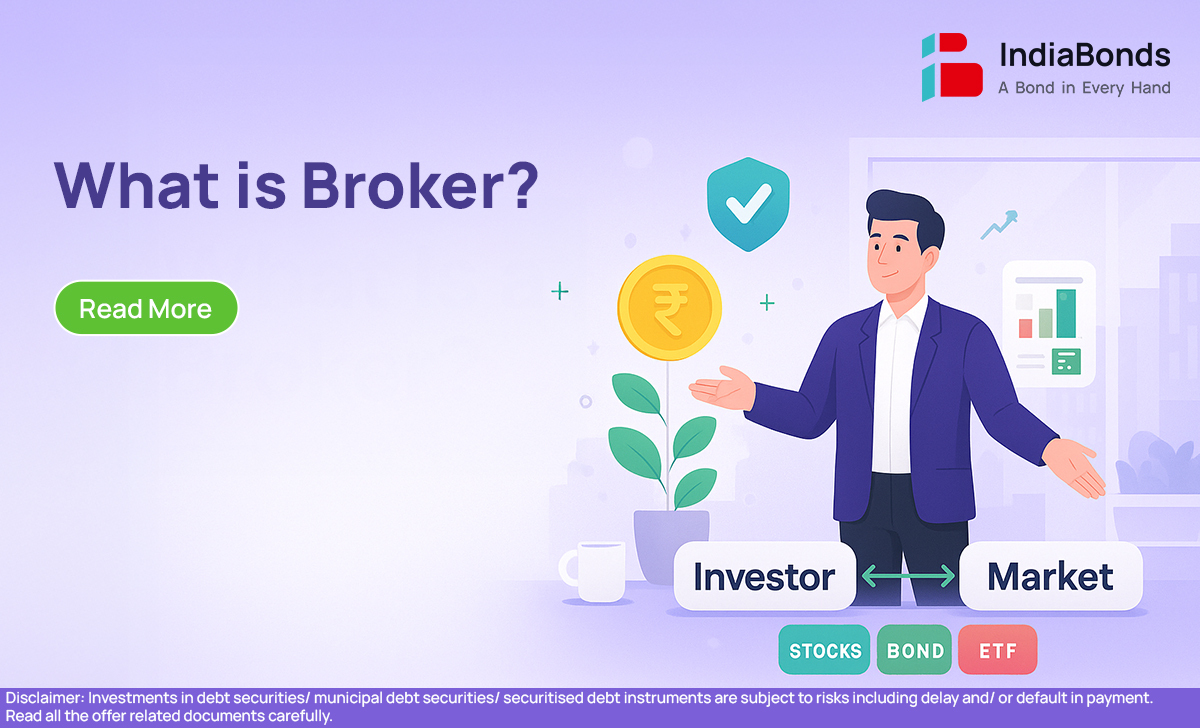
If you’ve ever rented a flat, bought a house, or even thought of buying bonds, one word pops up again and again—broker. We all know the type: the person who knows “someone” and somehow gets the deal through. In simple terms, a broker is that middle link who saves you the headache of figuring everything out yourself.
What Is a Broker?
Now, what is broker exactly? The formal broker definition says it’s someone who connects buyers and sellers for a fee. But that’s the dictionary. In reality, think of the property broker who finds you a one-BHK near your office, or the bond broker who explains what yield means when you’re lost in finance jargon. That’s broker meaning in day-to-day life—they’re the ones who step in when you don’t have the time, contacts, or knowledge to do it yourself.
Understanding Brokers
Let’s take Ravi as an example. He’s 32, working in Pune, and wants to put some savings into bonds. Where does he start? He googles a few terms, gets more confused, and finally calls a bond broker. The broker tells him which bonds are safe, which ones give monthly income, and also files the paperwork. For Ravi, this was not just about execution—it was relief.
This is what brokers actually do. They aren’t just deal-makers. They are educators, translators of jargon, and sometimes even the ones who stop you from making a mistake. Most charge a commission or fee, yes, but the good ones make sure you never feel short-changed.




Discount vs. Full-Service Brokers
Here’s where it gets interesting. Some brokers are like Zomato’s “no-frills” delivery—you just get the food. These are discount brokers: cheap, efficient, but no advice. Then there are full-service brokers, more like your family’s old travel agent—they book tickets, hotels, and even suggest where to eat. Ravi, after learning the basics, shifted to a discount broker app. His cousin Meera, who didn’t want to stress about markets, stuck with a full-service broker who explained everything in detail. The right pick depends on your comfort and budget.
Real Estate Brokers
In India, for most of us, the word “broker” means the person who helped us rent our first flat. Remember those Sunday mornings, running from one dingy apartment to another? That’s when the real estate broker shows up, jingling keys and saying, “Sir, this one is VFM.”
Ravi recalls wasting two weekends before a broker stepped in. Within hours, he had a shortlist, bargained down the rent, and even nudged the landlord to fix a leaking tap. Did he charge commission? Yes. Was it worth it? Absolutely. Because without that help, Ravi would still be scrolling OLX.
Broker Regulation
Here’s the serious bit. Money and property are big stakes, so brokers can’t just operate on goodwill. In India, financial brokers must register with SEBI, and property brokers come under RERA. These rules are not paperwork, they’re protection.
Ravi once got a call from someone offering “guaranteed” bond returns. Sounded tempting, until he checked and found the person wasn’t SEBI-registered. That was a red flag. Globally too, regulators like the FCA (UK) or SEC (US) keep brokers accountable. Bottom line: before you trust a broker, check their licence. It’s as basic as checking the expiry date on milk.
Examples of Brokers
Brokers aren’t a one-size-fits-all bunch. Stockbrokers handle equities on NSE or BSE. Bond brokers—like digital platforms such as IndiaBonds—open up government bonds, corporate bonds, even sovereign gold bonds. Commodity brokers deal with gold, oil, or wheat. Insurance brokers help families pick the right life cover. And forex brokers handle currency trades.
Take the same family: Ravi uses a bond broker for fixed income. Meera opens a stockbroker account for equities. Their uncle, who owns a jewellery shop in Jaipur, relies on a commodity broker to hedge gold prices. And when their parents sold land, it was the local property broker who made the deal possible. Different needs, different brokers, same function—connect people and close deals.
Conclusion
So, what’s the takeaway? A broker, no matter the type, is the bridge between people and markets. The broker meaning may shift—finance, property, commodities—but the role is steady: they save you time, effort, and often, costly mistakes. Ravi learned that first-hand. With the right, regulated broker, you’re not just buying a product—you’re buying peace of mind.
FAQs
Q1. What are the benefits of using a bond broker to invest in fixed income securities?
They bring access, explain products simply, and often secure better prices than going solo.
Q2. How does a bond broker make money?
Usually through commissions or spreads. The trick is to ask upfront and keep it transparent.
Q3. What are the key responsibilities of a bond broker?
To connect buyers and sellers, clarify pricing, ensure compliance, and close deals smoothly.
Q4. What are the qualifications required to become a bond broker?
In India, SEBI registration and NISM exams are mandatory. A finance background helps but isn’t everything.
Q5. Are brokers necessary for every investment?
Not always. With online apps, you can go direct. But for most people, especially beginners, brokers reduce confusion and risk.
Disclaimer : Investments in debt securities/ municipal debt securities/ securitised debt instruments are subject to risks including delay and/ or default in payment. Read all the offer related documents carefully.
884